FTIR Spectroscopy: A Comprehensive Guide to Distinguishing Metabolic Burden from Pathological Metabolomic Shifts
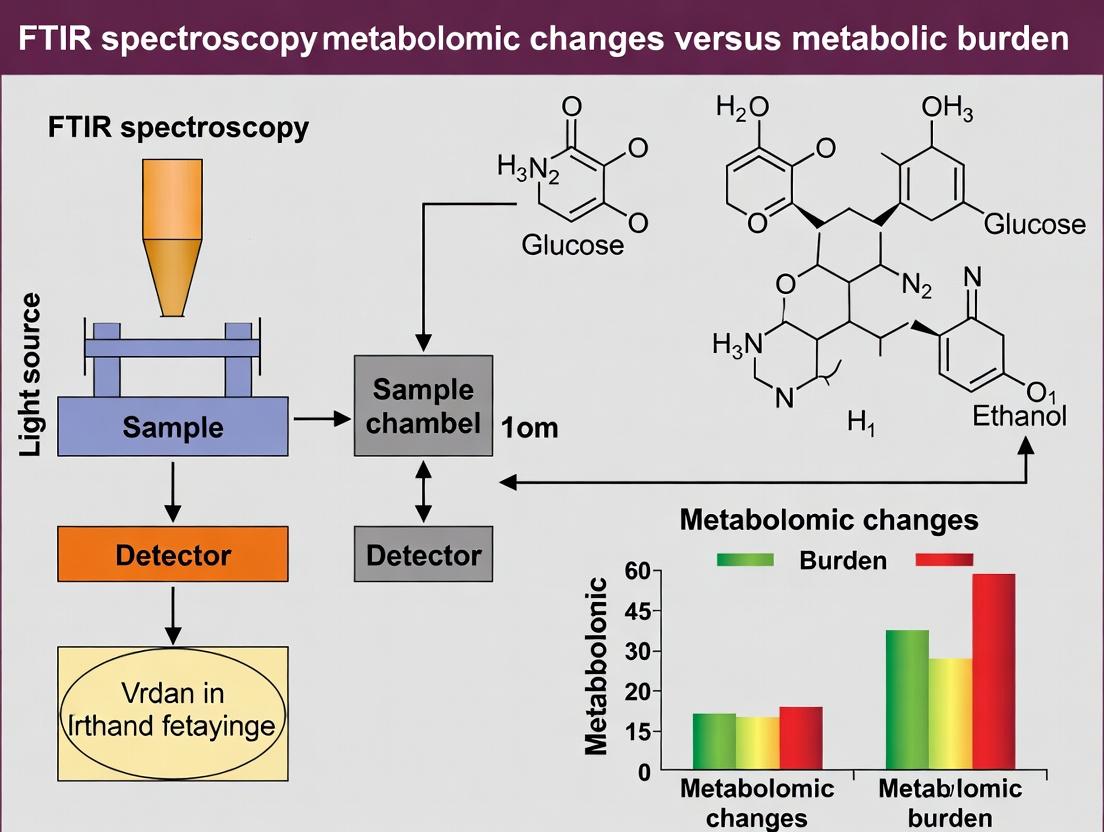
This article provides a targeted resource for biomedical researchers and drug development professionals on applying Fourier-Transform Infrared (FTIR) spectroscopy to a critical analytical challenge: distinguishing between general metabolic burden (e.g.,...
FTIR Spectroscopy: A Comprehensive Guide to Distinguishing Metabolic Burden from Pathological Metabolomic Shifts
Abstract
This article provides a targeted resource for biomedical researchers and drug development professionals on applying Fourier-Transform Infrared (FTIR) spectroscopy to a critical analytical challenge: distinguishing between general metabolic burden (e.g., from protein overexpression or stress) and specific metabolomic changes indicative of disease or treatment efficacy. We explore the foundational principles of FTIR for metabolic fingerprinting, detail robust methodologies for sample preparation and spectral acquisition, address common pitfalls in data interpretation, and validate FTIR's performance against gold-standard techniques like LC-MS. The goal is to equip scientists with a practical framework for using FTIR as a rapid, high-throughput screening tool to deconvolute complex metabolic responses in cell cultures and biofluids.
Metabolic Fingerprinting with FTIR: Core Principles for Detecting Burden vs. Disease
Fourier-Transform Infrared (FTIR) spectroscopy has emerged as a powerful, label-free technique for monitoring global metabolomic states in biological systems. Within bioprocessing and drug development, a critical challenge is distinguishing between non-specific, growth-associated metabolic burden and the targeted metabolic rewiring induced by pathway engineering or drug treatment. This guide compares the spectral signatures characteristic of these two distinct states, providing a framework for researchers to deconvolute complex FTIR data.
Comparative Analysis of Spectral Signatures
The following table summarizes the key FTIR spectral regions and their differential responses to general metabolic burden versus specific pathway alterations, based on recent experimental studies.
Table 1: FTIR Spectral Signatures: Metabolic Burden vs. Specific Pathway Alteration
| Spectral Region (cm⁻¹) | Associated Biomolecular Assignment | General Metabolic Stress (Burden) Signature | Specific Pathway Alteration Signature | Key Differentiating Factor |
|---|---|---|---|---|
| ~1745 cm⁻¹ | Ester C=O stretch (lipids, fatty acids) | Often increased, indicating lipid storage/energy reserve accumulation. | Variable: Decreased in fatty acid β-oxidation activation; Increased in lipid biosynthesis engineering. | Trend Correlation: Burden shows coupled increase with 1450 cm⁻¹ (CH₂ bending). Specific alterations may decouple these. |
| ~1655 cm⁻¹ (Amide I) | Protein secondary structure (α-helix, β-sheet) | Broadening, shift to lower wavenumbers, indicating protein aggregation/unfolding stress. | Specific shifts: e.g., increase in β-sheet/aggregate signal in recombinant protein overproduction pathways. | Bandshape Analysis: Burden causes non-specific broadening. Pathway changes may cause sharper, specific component changes. |
| ~1540 cm⁻¹ (Amide II) | Protein N-H bending, C-N stretching | Decreased intensity relative to Amide I, indicating reduced protein synthesis rate. | May show specific changes if pathway involves amine/amide metabolism (e.g., nitrogen assimilation). | Ratio (Amide II/I): Decreases globally under burden. May increase selectively in N-metabolism pathways. |
| ~1450 cm⁻¹ | CH₂ bending (primarily lipids) | Strong increase, linked to lipid droplet formation. | Can decrease in engineered strains with redirected carbon flux away from lipid synthesis. | 1745/1450 cm⁻¹ Ratio: Stable under burden, variable in pathway engineering. |
| ~1400-1380 cm⁻¹ | COO⁻ symmetric stretch (organic acids, amino acids) | Often increases (e.g., acetate, pyruvate accumulation from overflow metabolism). | Fingerprint region: Specific patterns emerge (e.g., succinate peak at ~1400 cm⁻¹ in TCA cycle upregulation). | Pattern Specificity: Burden leads to broad acid accumulation. Pathway alterations show distinct, identifiable organic acid fingerprints. |
| ~1250-1220 cm⁻¹ | PO₂⁻ asymmetric stretch (nucleic acids, phospholipids) | Increased, reflecting higher ribosomal RNA content during inefficient, stressed growth. | Less pronounced unless pathway directly involves nucleotide metabolism or phospholipid turnover. | Correlation with Growth Rate: High inverse correlation under burden. Weak correlation in specific alterations. |
| ~1150-1050 cm⁻¹ | C-O, C-C stretches (carbohydrates, glycogen) | Significant increase in glycogen/carbohydrate storage peaks as carbon flux is mismanaged. | Depletion of specific peaks if carbon is channeled into an engineered product (e.g., polyhydroxyalkanoates). | Glycogen Region (1150, 1080, 1030 cm⁻¹): Global increase under burden. Targeted depletion in successful pathway engineering. |
| ~900-700 cm⁻¹ | "Fingerprint" region (complex mixes) | Increased general "noise" and baseline shifts. | Emergence of unique, reproducible peaks corresponding to specific metabolites (e.g., terpenes, secondary metabolites). | Peak Uniqueness: Burden adds spectral "background." Pathway success introduces new, sharp "foreground" peaks. |
Experimental Protocols for Differentiation
Protocol 1: Time-Course FTIR with Chemometric Analysis
Objective: To disentangle burden from pathway-specific signals over a fermentation/production timeline.
- Sample Preparation: Harvest cells from bioreactor at defined time points (lag, exponential, stationary, production phases). Wash 2x with 0.9% saline, resuspend to uniform optical density.
- FTIR Measurement: Spot 20 µL of cell suspension onto a 96-well silicon microplate. Dry under mild vacuum. Acquire spectra in transmission mode (4000-400 cm⁻¹, 4 cm⁻¹ resolution, 64 co-added scans). Use atmospheric suppression.
- Data Analysis:
- Pre-processing: Vector normalization, 2nd derivative (Savitzky-Golay, 13-point window).
- Chemometrics: Perform Principal Component Analysis (PCA) on full spectrum. Cluster time points by metabolic phase.
- Key Differentiation: Plot PCA scores. General burden manifests as a continuous trajectory shift across all phases. Specific alteration appears as a distinct "branching" of the trajectory at the induction point of the pathway.
Protocol 2: Stressor Control Experiment
Objective: To establish a baseline "burden signature" for subtractive analysis.
- Experimental Design:
- Group A (Burden Control): Wild-type strain transformed with an empty, high-copy-number plasmid under strong inducer.
- Group B (Pathway Engineered): Isogenic strain expressing the target metabolic pathway from the same vector/inducer.
- Group C (Unstressed Control): Wild-type strain with no plasmid.
- Procedure: Cultivate all groups in identical conditions. Harvest at mid-exponential phase (OD₆₀₀ ~0.8). Prepare FTIR samples as in Protocol 1.
- Spectral Subtraction: Average spectra from Group C (unstressed) are subtracted from Groups A and B. The resultant spectrum for Group A defines the "pure burden" signature. Differences between the (B-C) and (A-C) spectra highlight the pathway-specific signature.
Signaling Pathways and Experimental Workflow Diagrams
Diagram 1: Conceptual separation of metabolic burden and specific pathway effects.
Diagram 2: Experimental workflow for isolating pathway-specific FTIR signatures.
The Scientist's Toolkit: Research Reagent Solutions
Table 2: Essential Materials for FTIR-Based Metabolic State Analysis
| Item / Reagent | Function in Experiment | Key Consideration for Differentiation Studies |
|---|---|---|
| Silicon 96-Well Microplates | Substrate for FTIR transmission measurement of dried cell films. | High optical quality and uniformity are critical for reproducible, high-throughput screening of multiple strain/time-point conditions. |
| 0.9% Saline (NaCl) Solution | Washing buffer to remove culture medium contaminants that confound intracellular spectra. | Must be used consistently; residual carbon sources (e.g., glucose) have strong IR signals. |
| Internal Standard (e.g., Potassium Thiocyanate, KSCN) | Added at known concentration to correct for path length variation in liquid samples. | Use for non-destructive, in-line bioreactor monitoring setups. Not typically used for dried films. |
| Chemometrics Software (e.g., OPUS, SIMCA, R packages like hyperSpec) | For spectral pre-processing, multivariate analysis (PCA, PLS-DA), and biomarker identification. | Essential for statistically separating the subtle spectral differences between burden and pathway signals. |
| Validated "Burden Control" Strain | A genetically defined strain exhibiting metabolic burden without the pathway of interest. | The most critical experimental control. Often a strain with a high-copy plasmid expressing a non-functional protein/gene. |
| Standard Metabolite Libraries (FTIR spectra) | Reference spectra of pure metabolites (e.g., organic acids, amino acids, lipids). | Used for fingerprint region assignment. Helps identify specific metabolites that accumulate in engineered vs. burdened cells. |
| High-Throughput Bioreactor System (e.g., DASGIP, ambr) | For precise, parallel cultivation under controlled conditions (pH, DO, feeding). | Eliminates environmental variation, ensuring spectral differences are due to genetic perturbation, not culture artifacts. |
| Derivatization Kits (for GC-MS validation) | To chemically modify metabolites for Gas Chromatography-Mass Spectrometry analysis. | Used for orthogonal validation of FTIR-predicted metabolite changes (e.g., succinate, acetate levels). |
Infrared (IR) spectroscopy probes molecular vibrations, providing a chemical fingerprint based on functional groups. In metabolomics, Fourier Transform Infrared (FTIR) spectroscopy offers a rapid, label-free method to detect these groups, serving as a proxy for metabolic state. This guide compares the IR signatures of core biomolecules, contextualized within research paradigms analyzing metabolomic changes (e.g., disease biomarkers) versus metabolic burden (e.g., recombinant protein production in bioprocessing). The data supports the thesis that FTIR can distinguish between specific metabolic shifts and generalized stress responses.
Comparative IR Spectral Signatures of Core Biomolecules The table below compares key IR-active functional groups, their vibrational modes, and their metabolic significance. Wavenumber ranges are approximate and can shift based on molecular environment.
Table 1: Key IR-Active Functional Groups in Core Metabolic Macromolecules
| Biomolecule Class | Key Functional Group(s) | Vibrational Mode | Typical Wavenumber (cm⁻¹) | Metabolic Interpretation & Comparison |
|---|---|---|---|---|
| Lipids | C=O (ester) | Stretch | ~1740 | High Signal: Indicates lipid accumulation. In metabolic burden, may signal carbon storage from overflow metabolism. |
| CH₂, CH₃ | Asym./Sym. Stretch | ~2920, ~2850, ~1460 | High CH₂/CH₃ Ratio: Suggests long hydrocarbon chains. Decreases can indicate membrane fluidity changes under stress. | |
| Proteins | Amide I (C=O stretch) | Stretch | ~1650 | Secondary Structure: 1650 (α-helix), ~1630 (β-sheet). Shifts indicate protein misfolding or altered expression. |
| Amide II (N-H bend) | Bend | ~1550 | Correlates with Amide I. A decreased Amide I/II ratio can suggest proteolysis during metabolic burden. | |
| Carbohydrates | C-O, C-C, C-O-H | Stretches/Bends | 1200-950 | "Carbohydrate Region": Complex. Peaks at ~1150, ~1080, ~1030 cm⁻¹ indicate glycogen, polysaccharides. Increases may signal carbon storage or cell wall synthesis. |
| O-H | Stretch | 3600-3200 (broad) | Overlaps with water. Requires careful drying for specific assignment to carbohydrates. | |
| Nucleic Acids | P=O (phosphodiester) | Asymmetric Stretch | ~1240 | "Nucleic Acid Region": High signal suggests high RNA/DNA content. Often increases during rapid growth or metabolic burden from recombinant DNA expression. |
| C-O, C-C in ribose | Stretches | ~1120, ~1060 | Overlaps with carbohydrates. Used in conjunction with ~1240 cm⁻¹ peak for confirmation. |
Experimental Protocol for FTIR-based Metabolomic Comparison Objective: To differentiate between a specific metabolic shift (e.g., ketosis) and a general metabolic burden (e.g., antibiotic production) in a bacterial model using FTIR spectroscopy.
- Sample Preparation: Harvest cells from two conditions: (A) Specific Shift: Grown in fatty acid-rich medium to induce β-oxidation; (B) Metabolic Burden: Engineered strain expressing a non-native metabolic pathway under strong induction. Include wild-type control. Wash cell pellets 3x in saline, spot onto IR-transparent slides, dry in a desiccator.
- FTIR Acquisition: Use an FTIR spectrometer with a reflectance or transmission module. Acquire spectra from 4000-600 cm⁻¹ at 4 cm⁻¹ resolution, 64 scans per sample. Perform background scan before each sample set.
- Data Pre-processing: Apply vector normalization to the entire spectrum. Perform second derivative (Savitzky-Golay, 9-13 points) to enhance band resolution. Focus on key regions: 3050-2800 cm⁻¹ (lipids), 1800-1500 cm⁻¹ (proteins, lipids), 1500-900 cm⁻¹ (mixed region: nucleic acids, carbohydrates, lipids).
- Data Analysis & Comparison: Integrate areas under specific peaks (e.g., ~1740 cm⁻¹ for lipids, ~1240 cm⁻¹ for nucleic acids). Use multivariate analysis (PCA, PLS-DA) to cluster samples. Compare band ratios (e.g., Lipid/Protein [~1740/~1650], Nucleic Acid/Protein [~1240/~1650]).
Expected Outcome: The specific metabolic shift (A) will show a pronounced increase in the ~1740 cm⁻¹ (ketone bodies/fatty acid derivatives) and ~2920 cm⁻¹ bands. The metabolic burden condition (B) will show a broad increase in the nucleic acid region (~1240, ~1120 cm⁻¹) and a decrease in the Amide I/II ratio, indicating ribosomal RNA upregulation and potential proteostatic stress, respectively.
The Scientist's Toolkit: Key Reagents & Materials for FTIR Metabolomics Table 2: Essential Research Reagent Solutions for FTIR-based Metabolic Profiling
| Item | Function & Rationale |
|---|---|
| IR-Transparent Substrate (e.g., ZnSe, BaF₂ slides) | Provides a non-absorbing window for IR beam transmission; choice depends on spectral range and pH resistance. |
| Deuterium Oxide (D₂O) | Used for solvent exchange in live-cell or hydrated samples to minimize the strong O-H stretching band from H₂O that obscures the ~3600-3000 cm⁻¹ region. |
| Chemometric Software (e.g., CytoSpec, OPUS, SIMCA, R packages) | For spectral pre-processing, multivariate statistical analysis (PCA, PLS-DA), and biomarker identification. Critical for comparing complex spectral datasets. |
| Internal Standard (e.g., Potassium Thiocyanate, KSCN) | A compound with a sharp, unique peak (e.g., ~2050 cm⁻¹) used to validate wavenumber calibration and instrument performance across runs. |
| Lyophilizer (Freeze Dryer) | For preparing dry biomass samples, which drastically reduces water interference and improves signal-to-noise ratio for cellular components. |
| Standard Reference Biomolecules | Purified lipids (e.g., triplamitin), proteins (e.g., albumin), carbohydrates (e.g., glycogen), nucleic acids (e.g., RNA) for generating reference spectra to validate peak assignments. |
Visualization: FTIR Data Analysis Workflow for Metabolic Comparison
Title: FTIR Workflow for Metabolic State Comparison
Visualization: IR Spectral Regions & Metabolic Interpretation
Title: Key FTIR Regions for Metabolic Biomolecules
Within metabolic research, distinguishing between specific metabolomic reprogramming and general metabolic burden is a significant challenge. Fourier Transform Infrared (FTIR) spectroscopy has emerged as a powerful, label-free tool for capturing global biochemical "fingerprints" of cell populations. This guide compares FTIR's performance to alternative techniques in the context of detecting metabolomic shifts, providing experimental data and protocols to frame its utility within a thesis on metabolomics versus metabolic burden.
Comparison of Analytical Techniques for Metabolomic Fingerprinting
The following table summarizes key performance metrics of FTIR against common alternatives used in metabolomics and metabolic burden studies.
Table 1: Performance Comparison of Metabolomic Profiling Techniques
| Feature/Aspect | FTIR Spectroscopy | Mass Spectrometry (MS)-Based Metabolomics | NMR Spectroscopy |
|---|---|---|---|
| Primary Output | Global biochemical fingerprint (functional groups). | Identification & quantification of specific metabolites. | Identification & quantification of abundant metabolites. |
| Sample Preparation | Minimal; cells dried directly on slides. | Extensive; metabolite extraction, derivatization possible. | Moderate; requires metabolite extraction in deuterated solvent. |
| Throughput | Very High (100s of samples/day). | Low to Moderate. | Low. |
| Destructive? | Yes (sample typically dried). | Yes. | No. |
| Key Strengths | Rapid, low-cost, high-throughput, monitors broad biochemical classes (lipids, proteins, carbs). | High sensitivity, specificity, and broad metabolite coverage. | Highly quantitative, reproducible, provides structural info. |
| Key Limitations | Lower specificity; cannot identify individual metabolites without extensive modeling. | High cost, complex data analysis, sample preparation bias. | Lower sensitivity, limited dynamic range. |
| Ideal for Thesis Context | Initial high-throughput screening for metabolic shift detection (burden vs. reprogramming). | Targeted/untargeted analysis to identify specific metabolites after FTIR screening. | Quantitative validation of major metabolic changes. |
Experimental Data & Protocol: Detecting Metabolic Shift vs. Burden
A core experimental design to differentiate a specific metabolic shift from a general burden involves treating a microbial or cell system with two stimuli: one causing a targeted metabolic reprogramming (e.g., induction of a recombinant pathway) and another causing a non-specific growth burden (e.g., sub-lethal antibiotic or toxic compound).
Protocol 1: FTIR-based Fingerprinting of Metabolic States
- Sample Preparation: Culture cells (e.g., E. coli, yeast) under controlled conditions. Harvest during mid-exponential phase for three groups: (A) Untreated control, (B) Induced for specific pathway (e.g., plasmid-borne recombinant protein), (C) Treated with a sub-inhibitory concentration of a metabolic stressor (e.g., sodium azide).
- Washing & Deposition: Wash cell pellets twice in 0.9% (w/v) ammonium sulfate to remove media interference. Spot 10-20 µL of normalized cell suspension onto a low-E slide or silicon wafer and air-dry.
- FTIR Acquisition: Acquire spectra in transmission or reflectance mode (e.g., 4000-400 cm⁻¹ range, 4 cm⁻¹ resolution, 64 co-added scans). Ensure consistent atmospheric subtraction (H₂O/CO₂).
- Data Pre-processing: Perform vector normalization on the fingerprint region (1800-900 cm⁻¹). Use second derivatives (Savitzky-Golay, 9-13 points) to enhance spectral resolution.
- Multivariate Analysis: Subject processed spectra to Principal Component Analysis (PCA) to visualize clustering. Use Linear Discriminant Analysis (LDA) or Partial Least Squares-Discriminant Analysis (PLS-DA) to build classification models.
Table 2: Hypothetical FTIR Spectral Data Output (Peak Area Ratios)
| Sample Group | Lipid Region (CH stretch) ~2920 cm⁻¹ | Amide I Region (Protein) ~1650 cm⁻¹ | Carbohydrate Region ~1150-1050 cm⁻¹ | Nucleic Acid Region ~1240 cm⁻¹ |
|---|---|---|---|---|
| Control (Balanced) | 1.00 ± 0.05 | 1.00 ± 0.04 | 1.00 ± 0.07 | 1.00 ± 0.05 |
| Recombinant Induction (Shift) | 1.45 ± 0.08 | 1.32 ± 0.06 | 0.95 ± 0.06 | 1.08 ± 0.04 |
| Metabolic Burden (Stress) | 0.90 ± 0.06 | 0.88 ± 0.05 | 1.25 ± 0.09 | 0.82 ± 0.06 |
Interpretation: A specific shift (recombinant induction) shows increased lipid/protein synthesis. A general burden shows depleted resources (lower protein/nucleic acid) and possible accumulation of storage carbs.
Visualizing the Experimental Workflow and Metabolic Pathways
FTIR Metabolomic Fingerprinting Workflow
FTIR Captures the Metabolomic State
The Scientist's Toolkit: Key Research Reagent Solutions
Table 3: Essential Materials for FTIR-based Metabolomic Studies
| Item | Function in Experiment |
|---|---|
| Low-E (Infrared) Slides | Optically reflective substrate for high-throughput sample deposition and direct analysis in reflectance mode. |
| 0.9% Ammonium Sulfate Solution | Isotonic washing buffer that minimizes cell lysis and leaves minimal IR interference after drying. |
| Silicon Wafer Substrates | Alternative to Low-E slides; provides a flat, IR-transparent background for transmission measurements. |
| FTIR Spectral Library (e.g., IRLIB) | Reference database of biological spectra for preliminary assignment of spectral bands. |
| Multivariate Analysis Software (e.g., Pirouette, SIMCA, R packages) | Essential for performing PCA, PLS-DA, and other statistical analyses on high-dimensional spectral data. |
| Microbial/Cell Culture Media (Chemically Defined) | Ensures reproducible growth and minimizes spectral contamination from complex media components. |
| Vacuum Desiccator | For consistent and complete drying of samples to remove water vapor interference. |
| Gold/Palladium Sputter Coater | For coating samples for Attenuated Total Reflectance (ATR)-FTIR to enhance signal, if required. |
FTIR spectroscopy provides an unmatched, high-throughput platform for capturing initial global metabolomic fingerprints, capable of distinguishing subtle spectral shifts indicative of targeted metabolic reprogramming versus broad-spectrum burden. While it lacks the specificity of MS or NMR, its speed and cost-efficiency make it an ideal primary screen. Integrating FTIR fingerprinting as a first-tier assay, followed by targeted MS validation of revealed metabolic features, forms a powerful, thesis-relevant strategy to deconvolute complex metabolic responses.
Contrasting Metabolic Burden (e.g., Recombinant Protein Production, Toxicity) and Targeted Metabolomic Changes (e.g., Oncogenic Rewiring, Drug Action)
This comparison guide examines two distinct metabolic phenomena: the generalized metabolic burden associated with cellular stress and the specific, targeted metabolomic changes from events like oncogenic transformation or drug action. Framed within a thesis on FTIR spectroscopy as a diagnostic tool, this analysis contrasts their causes, phenotypic outcomes, and detection methodologies, supported by experimental data.
Comparative Analysis: Metabolic Burden vs. Targeted Metabolomic Changes
| Aspect | Metabolic Burden (e.g., Recombinant Protein Production) | Targeted Metabolomic Changes (e.g., Oncogenic Rewiring) |
|---|---|---|
| Primary Cause | Resource drain (ATP, amino acids, nucleotides) for heterologous processes; potential toxicity from misfolded proteins or pathway intermediates. | Genetic/epigenetic alterations (e.g., KRAS, MYC activation) directly reprogramming specific metabolic enzyme expression and flux. |
| Metabolic Network Impact | Broad, systemic burden. Reduces pools of central metabolites (e.g., ATP, NADPH), slows growth, increases maintenance energy. | Precise, node-specific alterations. Increases flux through glycolysis/glutaminolysis, alters lipid synthesis, one-carbon metabolism. |
| Phenotypic Outcome | Decreased cellular growth rate, reduced viability, activation of generic stress responses (heat shock, stringent response). | Sustained proliferation, biomass accumulation, resistance to cell death, and altered drug sensitivity. |
| FTIR Spectral Signature | Broad changes in nucleic acid/protein region ratios, increased "stress band" intensities related to protein aggregation or membrane damage. | Sharp, specific shifts in lipid ester C=O stretches, carbohydrate regions, and phosphate bands reflecting new steady-state metabolite levels. |
| Reversibility | Often reversible upon removal of burden (e.g., inducer). | Typically stable and heritable, persisting unless the oncogenic driver is therapeutically inhibited. |
| Key Experimental Data | 40% reduction in growth rate in E. coli producing recombinant protein; 60% increase in unused carbon overflow metabolites. | 2- to 5-fold increase in lactate/pyruvate ratio in KRAS-mutant cells; 3-fold increase in phosphocholine levels detected by NMR/LC-MS. |
Experimental Protocols for Key Studies
Protocol 1: Quantifying Metabolic Burden in Recombinant E. coli
- Strain & Culture: Transform E. coli BL21(DE3) with plasmid encoding target protein (e.g., GFP) under T7 promoter. Grow in M9 minimal media + 0.4% glucose.
- Induction: At OD600 ~0.6, add 1 mM IPTG to induce expression. Use uninduced culture as control.
- Growth Metrics: Monitor OD600 every 30 min for 5 hours. Calculate specific growth rate (μ) for induced vs. control.
- Metabolite Analysis: At 2h post-induction, quench metabolism, extract intracellular metabolites. Use LC-MS to quantify ATP/ADP ratio, NADPH/NADP+ ratio, and amino acid pools.
- FTIR Sample Prep: Pellet 1mL culture, wash twice in PBS, lyophilize. Analyze ~1mg dry cell pellet in transmission mode.
Protocol 2: Profiling Oncogenic Rewiring in Pancreatic Ductal Adenocarcinoma (PDAC) Cells
- Cell Lines: Use isogenic human pancreatic epithelial cells with/without doxycycline-inducible oncogenic KRAS(G12D).
- Treatment: Induce KRAS expression with 1 µg/mL doxycycline for 72 hours.
- Metabolite Extraction: Perform cold methanol extraction on ~1x10^6 cells. Dry under nitrogen.
- Targeted LC-MS/MS: Reconstitute in HPLC-grade water. Use multiple reaction monitoring (MRM) to quantify TCA intermediates, nucleotides, and phospholipid precursors.
- FTIR of Cell Monolayers: Grow cells on IR-reflective slides. Fix in 4% PFA for 10 min, air-dry. Collect spectra in reflectance mode.
Visualizing Metabolic Pathways and Experimental Workflow
Title: Contrasting Pathways of Metabolic Burden and Oncogenic Rewiring
Title: Integrated Workflow for Metabolomic and FTIR Analysis
The Scientist's Toolkit: Key Research Reagent Solutions
| Item | Function in Research |
|---|---|
| IPTG (Isopropyl β-D-1-thiogalactopyranoside) | Inducer for T7/lac-based expression systems in prokaryotes; used to trigger recombinant protein production and metabolic burden. |
| Doxycycline | Tetracycline analog for inducing gene expression in mammalian Tet-On systems; used to study time-resolved oncogenic rewiring. |
| Cold Methanol (-40°C) | Standard quenching/extraction solvent for metabolomics; rapidly halts enzyme activity and extracts polar metabolites. |
| Deuterated Internal Standards (e.g., d4-Alanine, 13C6-Glucose) | For LC-MS/MS quantification; corrects for ion suppression and variation in extraction efficiency. |
| IR-Reflective Slides (e.g., Low-E Slides) | Substrate for FTIR microspectroscopy of cell monolayers; provides reflective surface for high-quality spectral acquisition. |
| Synergy HTX Multi-Mode Reader | For high-throughput growth kinetics (OD600) and other plate-based assays to quantify burden or cell proliferation. |
| C18 Reversed-Phase LC Columns (e.g., Zorbax) | For chromatographic separation of complex metabolite mixtures prior to mass spectrometry detection. |
| Protease/Phosphatase Inhibitor Cocktails | Preserves post-translational modification states during protein analysis in signaling studies related to rewiring. |
Metabolic burden and targeted metabolomic changes represent fundamentally different biological phenomena, distinguished by their cause (nonspecific drain vs. specific reprogramming), systemic impact, and spectral signatures. FTIR spectroscopy, as a rapid, label-free technique, shows promise in differentiating these states—broad spectral shifts indicate burden, while specific fingerprint region alterations signal targeted rewiring. Integrating FTIR with targeted LC-MS/MS validation provides a powerful framework for distinguishing these metabolic modes in bioproduction and therapeutic development.
Step-by-Step FTIR Protocol for Reliable Metabolic Phenotyping in Bioprocessing and Disease Models
Within the framework of FTIR spectroscopy for detecting metabolomic changes versus metabolic burden, sample preparation is the critical determinant of spectral fidelity. This guide compares prevalent sample preparation methods for FTIR metabolomic analysis, focusing on spectral quality, reproducibility, and sensitivity to biological perturbations.
Comparative Analysis of Sample Preparation Methodologies
Cell Pellet Preparation: Centrifugation vs. Filtration
Experimental Protocol: HeLa cells were cultured under standard conditions. For the centrifugation method, cells were washed with PBS, centrifuged at 500 x g for 5 min, and the pellet was directly applied to an IR-reflective slide. For the filtration method, cells were collected onto a 0.45 µm PTFE membrane filter under gentle vacuum, rinsed with ammonium formate buffer, and air-dried. FTIR spectra were collected in transmission mode (64 scans, 4 cm⁻¹ resolution). Spectral quality was assessed by the signal-to-noise ratio (SNR) of the Amide I band and the reproducibility of the 2850 cm⁻¹ (lipid CH₂ stretch) peak position.
Table 1: Comparison of Cell Pellet Preparation Methods
| Metric | Centrifugation Pellet | Filtration on PTFE | Cytospin Preparation |
|---|---|---|---|
| Amide I SNR | 125 ± 15 | 210 ± 25 | 180 ± 20 |
| Lipid Peak Reproducibility (CV%) | 12% | 4% | 7% |
| Residual Buffer Contamination | High | Very Low | Moderate |
| Preparation Time | Fast | Moderate | Slow |
| Suitability for Metabolic Burden Studies | Low (high background variability) | High (clean metabolic fingerprint) | Medium |
Conclusion: Filtration yields superior spectral quality by effectively removing interfering buffers, providing a clearer window for detecting subtle metabolomic shifts indicative of metabolic burden.
Biofluid Analysis: Dried Droplets vs. Lyophilization
Experimental Protocol: Human serum samples were pooled and aliquoted. For dried droplets, 5 µL of serum was spotted on a silicon 96-well slide and dried in a desiccator. For lyophilization, 100 µL of serum was flash-frozen in liquid nitrogen and lyophilized for 24 hours. The resulting powder was mixed with 2 mg of infrared-transparent KBr and pressed into a pellet. Spectra were acquired in transmission mode.
Table 2: Comparison of Biofluid Preparation Methods
| Metric | Dried Droplet (Serum) | Lyophilized KBr Pellet (Serum) | Attenuated Total Reflection (ATR) Liquid |
|---|---|---|---|
| Spectral Distortion (Protein Conformation) | High (β-sheet artifacts) | Minimal (native-like) | Minimal |
| Water Vapor Interference | Severe | Negligible | Moderate |
| Reproducibility (1500-1700 cm⁻¹ CV%) | 18% | 6% | 10% |
| Sample Throughput | High | Low | Very High |
| Detection Sensitivity for Metabolites | Low | High (sample concentration possible) | Medium |
Conclusion: Lyophilization, while lower throughput, provides optimal spectral quality for fundamental metabolomic fingerprinting by eliminating water and concentrating analytes. Dried droplets, though fast, introduce artifacts that can confound the detection of subtle metabolic changes.
Lyophilization Efficacy: Standard vs. Controlled-Rate Freezing
Experimental Protocol: Bacterial cell cultures (E. coli) were harvested in mid-log phase. Samples were either flash-frozen in liquid nitrogen or subjected to controlled-rate freezing (1°C/min) before lyophilization. Post-lyophilization, samples were analyzed by FTIR and cell viability was assessed via colony-forming units (CFU) on reactivation (for viability-linked studies).
Table 3: Impact of Freezing Method Prior to Lyophilization
| Metric | Flash-Freezing (LN₂) | Controlled-Rate Freezing |
|---|---|---|
| Spectral Integrity of Labile Metabolites | High (preserves small molecules) | Medium (some loss) |
| Membrane Lipid Order (2950-2850 cm⁻¹ ratio) | Preserved (ratio: 0.85) | Altered (ratio: 0.72) |
| Post-Rehydration Viability (if applicable) | 5% | 25% |
| Recommended for | Metabolomic Snapshot | Metabolic Burden (viability-linked) |
Conclusion: Flash-freezing better preserves the instantaneous metabolic state for snapshots, while controlled-rate freezing may be preferred for studies where subsequent viability is a factor in burden assessment.
The Scientist's Toolkit: Research Reagent Solutions
Table 4: Essential Materials for FTIR Metabolomic Sample Prep
| Item | Function in Preparation |
|---|---|
| Ammonium Formate Buffer (150 mM) | Volatile washing solution for cells; removes salts without IR interference. |
| PTFE Membrane Filters (0.45 µm) | Supports uniform cell monolayers for filtration, minimal IR absorbance. |
| IR-Transparent KBr Powder | Matrix for creating pellets from lyophilized biofluid or tissue powders. |
| Silicon 96-Well Slides | Substrate for high-throughput dried droplet analysis; low background. |
| Liquid Nitrogen | For instantaneous quenching of metabolism and flash-freezing samples. |
| Lyophilizer (Freeze-Dryer) | Removes water via sublimation, preventing solute migration and concentration artifacts. |
| Desiccator with P₂O₅ | For dry storage of samples and slides to prevent water vapor absorption. |
Visualized Workflows and Pathways
Title: FTIR Metabolomics Sample Preparation Workflow
Title: Interpreting Spectra for Metabolic Change vs Burden
Fourier-transform infrared (FTIR) spectroscopy is a cornerstone technique for detecting metabolomic changes and assessing metabolic burden in biological systems. The choice between Transmission (TR) and Attenuated Total Reflectance (ATR) sampling modes significantly impacts data quality, reproducibility, and applicability to different matrices. This guide provides an objective comparison with experimental data to inform method selection within metabolomics research.
Fundamental Comparison & Experimental Data
Table 1: Core Performance Comparison of TR-FTIR vs. ATR-FTIR
| Parameter | Transmission (TR) FTIR | ATR-FTIR |
|---|---|---|
| Sample Preparation | Requires thin, IR-transparent windows (e.g., BaF₂, CaF₂). Often involves drying. | Minimal. Sample placed in direct contact with ATR crystal (e.g., diamond, ZnSe). |
| Sample Penetration Depth | ~10-100 µm (pathlength-dependent). | ~0.5-5 µm (wavelength & crystal-dependent). |
| Spectral Artifacts | Potential for interference fringes; scattering for uneven samples. | Less prone to scattering; potential for pressure-dependent band distortion. |
| Quantitative Ease | High with controlled pathlength (Beer-Lambert law applicable). | Requires contact correction; less straightforward quantification. |
| Ideal Matrix Types | Homogeneous liquids, cultured cell pellets, biofluids (dried), tissue sections. | Viscous liquids, gels, intact tissues, live microbial colonies, powders. |
| Approx. Signal-to-Noise Ratio (for bacterial cells) | 300:1 (with optimized drying) | 150:1 (direct contact) |
| Typical Spectral Acquisition Time | 60-120 sec (64 scans, 4 cm⁻¹ resolution) | 30-60 sec (64 scans, 4 cm⁻¹ resolution) |
| Relative Water Signal Interference | High for aqueous samples. | Significantly lower; surface-sensitive. |
| Sample Throughput | Lower (preparation intensive). | Higher (minimal preparation). |
Table 2: Experimental Data: Lipid Band Ratios (CH₂/Amide I) in Different Matrices
| Biological Matrix | Transmission Mode (Mean Ratio ± SD) | ATR Mode (Mean Ratio ± SD) | Recommended Mode |
|---|---|---|---|
| E. coli Cell Pellet (dried) | 0.42 ± 0.03 | 0.38 ± 0.05 | Transmission (Higher reproducibility) |
| Intact Mouse Liver Tissue | N/A (Too thick/scattering) | 0.85 ± 0.07 | ATR (Feasible measurement) |
| Blood Plasma (dried film) | 0.21 ± 0.02 | 0.19 ± 0.03 | Transmission (Superior film homogeneity) |
| Live Biofilm on Substrate | N/A (Non-destructively impossible) | 0.91 ± 0.11 | ATR (Only viable option) |
| Yeast Suspension (wet) | 0.15 ± 0.04 (High water variance) | 0.16 ± 0.02 | ATR (Lower water interference) |
Detailed Experimental Protocols
Protocol 1: Transmission FTIR for Bacterial Cell Pellet Metabolomics
- Culture & Harvest: Grow bacterial culture to desired OD. Centrifuge 1.5 mL at 10,000 x g for 5 min. Wash twice with 0.9% saline.
- Spotting: Resuspend pellet in 20 µL of water. Spot 10 µL onto a polished BaF₂ window.
- Drying: Dry in a desiccator with mild vacuum for 30 min to form a homogeneous film.
- Acquisition: Place window in spectrometer holder. Acquire spectra from 4000-800 cm⁻¹, 4 cm⁻¹ resolution, 128 scans, under continuous dry air purge.
- Processing: Apply atmospheric correction, vector normalization (1800-900 cm⁻¹ region), and second-derivative transformation (Savitzky-Golay, 9 points).
Protocol 2: ATR-FTIR for Intact Tissue Metabolic Profiling
- Tissue Preparation: Freshly excise tissue (e.g., liver). Rinse in saline. Blot gently. Create a flat, clean section (~2mm thick) with a scalpel.
- Crystal Prep: Clean diamond ATR crystal with ethanol and dry.
- Mounting: Place tissue section directly on crystal. Use the spectrometer's pressure clamp to apply consistent, firm contact. Note: Excessive pressure can alter spectra.
- Acquisition: Acquire spectra immediately, 4000-800 cm⁻¹, 4 cm⁻¹ resolution, 64 scans.
- Processing: Apply ATR correction (instrument software), vector normalization, and baseline correction.
Visualizing Method Selection & Workflow
FTIR Mode Selection Decision Tree
FTIR in Metabolic State Analysis Workflow
The Scientist's Toolkit: Key Research Reagent Solutions
| Item | Function in FTIR Sample Prep | Example/Brand |
|---|---|---|
| IR-Transparent Windows | Substrate for Transmission mode; must be insoluble and transparent in mid-IR range. | BaF₂, CaF₂, or KBr windows (e.g., from International Crystal Labs). |
| ATR Crystals | Internal reflection element for ATR mode; different refractive indices/hardness. | Diamond (durable, broad range), ZnSe (high refractive index), Ge (deep penetration). |
| Saline Solution (0.9% NaCl) | Isotonic wash buffer for cell pellets to remove culture media contaminants. | Molecular biology grade, RNase/DNase-free. |
| Desiccant | For drying samples on Transmission windows to reduce water vapor interference. | Indicating silica gel beads (e.g., Drierite). |
| Spectroscopic Cleaning Solvents | High-purity solvents for cleaning crystals/windows without residue. | HPLC-grade methanol, ethanol, or isopropanol. |
| Pressure Applicator | For ensuring consistent, reproducible contact in ATR mode. | Often integrated into spectrometer (clamp); external gauged clamps available. |
| Vector Normalization Software | Essential for spectral preprocessing to compare band intensities between samples. | Built into OPUS, GRAMS; also via open-source (e.g., HyperLab, COW in R). |
Publish Comparison Guide
This guide objectively compares the impact of core FTIR spectral acquisition parameters on data reproducibility for metabolomic analysis, specifically within the context of research differentiating metabolic burden from true metabolomic reprogramming. We provide direct performance comparisons using experimental data.
Thesis Context: In FTIR-based metabolomics, a central challenge is discerning specific metabolomic changes (e.g., from pathway activation) from non-specific metabolic burden (e.g., from protein overexpression). High-fidelity, reproducible spectral acquisition is the critical first step to ensure downstream multivariate analysis detects biologically relevant spectral variances, not instrument- or environment-derived artifacts.
Experimental Protocol for Cited Comparisons
- Sample Preparation: E. coli cultures (control vs. recombinant protein-expressing strain, inducing metabolic burden) were grown in triplicate. Cells were harvested at mid-log phase, washed, and spotted onto IR-transparent slides. A uniform, thin biofilm was ensured for all samples.
- Instrumentation: Experiments used a Bruker Vertex 70 FTIR spectrometer with an HTS-XT high-throughput extension.
- Parameter Testing: For each parameter set, triplicate technical repeats of each biological triplicate were acquired (n=9 spectra per condition).
- Data Analysis: Spectra were pre-processed (vector normalization, baseline correction). Reproducibility was quantified using the average Pearson correlation coefficient between all technical replicates within a biological group. Signal-to-Noise Ratio (SNR) was calculated from the peak height at ~1650 cm⁻¹ (amide I) divided by the RMS noise in the 1800-1900 cm⁻¹ region.
Comparison Table 1: Spectral Resolution vs. Reproducibility & SNR
Objective: To compare the trade-off between spectral detail and acquisition time/noise at common resolution settings.
| Resolution (cm⁻¹) | Avg. Correlation (r) | Avg. SNR | Acquisition Time (approx.) | Key Advantage | Key Limitation |
|---|---|---|---|---|---|
| 16 | 0.982 | 850:1 | 30 s | Fast, high SNR, ideal for rapid screening. | Misses fine spectral features (e.g., shoulder peaks). |
| 8 | 0.991 | 750:1 | 60 s | Optimal balance; resolves most biomolecule bands. | Slightly longer acquisition than lower resolution. |
| 4 | 0.993 | 620:1 | 120 s | Resolves subtle shifts (e.g., nucleic acid conformation). | Lower SNR, longer scan time, larger file size. |
| 2 | 0.994 | 500:1 | 240 s | Maximum spectral detail for complex mixtures. | Very low SNR, impractical for high-throughput. |
Conclusion: For differentiating metabolic states, 8 cm⁻¹ provides the best compromise, resolving key biomolecular regions (e.g., amide I/II, fatty acid tails) with excellent reproducibility and practical throughput.
Comparison Table 2: Number of Scans vs. Spectral Quality
Objective: To compare the effect of scan co-averaging on signal-to-noise and reproducibility at a fixed 8 cm⁻¹ resolution.
| Number of Scans | Avg. SNR | Avg. Correlation (r) | Observation |
|---|---|---|---|
| 16 | 450:1 | 0.975 | Baseline noise visible; acceptable for qualitative checks. |
| 32 | 620:1 | 0.988 | Noise significantly reduced; recommended minimum for QA. |
| 64 | 750:1 | 0.991 | Optimal for most metabolomic studies; high reproducibility. |
| 128 | 880:1 | 0.992 | Marginal SNR gain beyond 64 scans for typical samples. |
Conclusion: 64 scans at 8 cm⁻¹ is the recommended standard, maximizing reproducibility without excessive time cost.
Comparison Table 3: Environmental Control Methods for Reproducibility
Objective: To compare methods for controlling atmospheric water vapor, a major source of spectral variance.
| Control Method | Avg. Correlation (r) | Key Spectral Artifact Reduced | Operational Complexity | Cost |
|---|---|---|---|---|
| None (Lab Air) | 0.945 | Severe H₂O vapor bands ~3400, 1600 cm⁻¹ | None | None |
| Continuous Purge (Dry Air) | 0.985 | Major vapor bands eliminated | Medium (requires purge gas) | Medium |
| Full Enclosure (Glovebox) | 0.992 | Eliminates vapor and CO₂ variability | High | High |
| Automatic Atmosphere Subtraction | 0.990* | Algorithmically removes vapor features | Low (software-based) | Low |
*Relies on a high-quality background collected under stable conditions.
Conclusion: A continuous dry air purge is the most practical and effective method for ensuring day-to-day reproducibility, essential for longitudinal metabolic burden studies.
Diagram 1: FTIR Workflow for Metabolomic Burden Studies
FTIR Workflow from Sample to Interpretation
Diagram 2: Signal Pathway of Acquisition to Reproducibility
How Parameters Drive Reproducible Results
The Scientist's Toolkit: Essential Research Reagents & Materials
| Item | Function in FTIR Metabolomic Studies |
|---|---|
| IR-Transparent Slide (e.g., ZnSe, BaF₂) | Substrate for sample deposition; provides a non-absorbing window in the mid-IR range. |
| Desiccator Cabinet | For consistent, dry storage of prepared slides before analysis to prevent water absorption. |
| Dry Air/Nitrogen Purge Gas & Regulator | To purge spectrometer optics, drastically reducing spectral interference from atmospheric water vapor and CO₂. |
| Sterile, Isotope-Minimal Culture Media | Ensures consistent cell growth and prevents spurious spectral peaks from media components (e.g., complex carbon sources). |
| Buffer Salts (D₂O-based if needed) | For physiological suspension; D₂O shifts the strong H₂O absorption band out of the biologically informative "fingerprint" region. |
| Validation Standard (e.g., Polystyrene Film) | A reference material with known sharp peaks to regularly verify instrument resolution, wavenumber accuracy, and SNR performance. |
| Automated Liquid Handler (Optional) | For high-throughput, reproducible spotting of cell suspensions onto slides, minimizing sample preparation variance. |
Within the context of FTIR spectroscopy for distinguishing metabolomic changes from metabolic burden in bacterial systems, data pre-processing is critical. Raw spectral data is obscured by scattering effects, path length variations, and baseline shifts. This guide compares the performance of common pre-processing pipelines in enhancing spectral clarity and improving downstream statistical separation.
Comparative Experimental Data
The following experiment analyzed E. coli cultures under two conditions: (A) metabolomic shift induced by a novel enzyme substrate, and (B) metabolic burden from recombinant protein overexpression. FTIR spectra (4000-600 cm⁻¹, 4 cm⁻¹ resolution) were collected in triplicate.
Table 1: Impact of Pre-processing on Signal-to-Noise Ratio (SNR) in the 1800-1500 cm⁻¹ (Amide I/II) Region
| Pre-processing Pipeline | Condition A SNR | Condition B SNR | ΔSNR (A vs B) |
|---|---|---|---|
| Raw Spectra | 42.1 ± 3.2 | 38.7 ± 2.9 | 3.4 |
| Baseline Correction Only | 85.6 ± 4.1 | 79.8 ± 5.2 | 5.8 |
| Baseline + Vector Normalization | 86.2 ± 3.8 | 81.1 ± 4.7 | 5.1 |
| Baseline + SNV Normalization | 87.5 ± 3.5 | 80.3 ± 4.1 | 7.2 |
| Baseline + SNV + 2nd Derivative (Savitzky-Golay) | 12.5 ± 1.1* | 9.8 ± 0.9* | 2.7 |
Note: SNR calculation for derivative spectra measures peak-to-peak noise in transformed space. SNV: Standard Normal Variate.
Table 2: Class Separation (Mahalanobis Distance) in PCA Space After Pre-processing
| Pre-processing Pipeline | Mahalanobis Distance (Metabolomic vs Burden) | Key Discriminatory Wavenumbers (cm⁻¹) Identified |
|---|---|---|
| Raw Spectra | 1.8 | 1654 (Amide I), 1540 (Amide II) |
| Baseline + SNV Normalization | 4.3 | 1654, 1540, 1452 (CH₂ bend), 1398 (COO⁻ sym) |
| Baseline + SNV + 2nd Derivative | 7.1 | 1745 (ester C=O), 1718 (carboxylic C=O), 1650 (α-helix), 1630 (β-sheet) |
Experimental Protocols
Protocol 1: FTIR Spectral Acquisition
- Culture & Harvest: Grow E. coli BL21(DE3) in M9 minimal media. Induce Condition A with 2 mM substrate analog; induce Condition B with 1 mM IPTG for recombinant protein expression. Harvest at mid-log phase by centrifugation (5,000 x g, 10 min, 4°C).
- Washing: Wash cell pellet twice in 0.9% (w/v) sterile saline solution.
- Sample Preparation: Spot 10 µL of concentrated cell suspension onto a 96-well silicon microplate and dry under vacuum for 45 minutes.
- Spectral Collection: Acquire spectra using a Bruker Vertex 70 FTIR spectrometer with HTS-XT extension. Settings: 4000-600 cm⁻¹ range, 4 cm⁻¹ resolution, 64 scans per sample, background correction with empty well.
Protocol 2: Pre-processing Pipeline Implementation (in Python usingscikit-learnandSciPy)
Visualizations
Title: FTIR Pre-processing Workflow for Metabolomics
Title: Differentiating Metabolomic Change vs Burden
The Scientist's Toolkit: Research Reagent Solutions
Table 3: Essential Materials for FTIR-based Metabolomic Burden Studies
| Item | Function in Experiment | Example Product/Catalog |
|---|---|---|
| Silicon 96-well Microplate | IR-transparent substrate for high-throughput sample deposition | Bruker HTS-XT Accessory Microplate |
| M9 Minimal Salts Base | Defined medium for metabolomic studies, minimizes spectral interference | Millipore Sigma M6030 |
| Deuterated Triglycine Sulfate (DTGS) Detector | Standard mid-IR detector for routine metabolomic fingerprinting | Standard in Bruker Vertex series |
| Savitzky-Golay Smoothing & Derivative Filters | Digital filter for derivative calculation and noise reduction | SciPy savgol_filter function |
| Asymmetric Least Squares (ALS) Algorithm | Robust baseline correction for complex spectra | baseline_removal Python package |
| Standard Normal Variate (SNV) Code | Corrects for scatter and path length variation in dense samples | Custom scikit-learn preprocessing step |
| Chemometric Software Suite | For PCA, PLS-DA, and statistical validation of spectral separations | Solo (Eigenvector) or PLS_Toolbox |
Within the broader thesis on FTIR spectroscopy for detecting metabolomic changes, this guide compares its application for monitoring metabolic burden in Chinese Hamster Ovary (CHO) cell bioreactors against alternative analytical methods. Metabolic burden, the redirection of cellular resources from growth to recombinant protein production, is a critical process parameter. This guide objectively compares the performance of FTIR with conventional methods using experimental data.
Performance Comparison: FTIR Spectroscopy vs. Conventional Methods
Table 1: Analytical Comparison for Metabolic Burden Monitoring
| Parameter | FTIR Spectroscopy | LC-MS/MS Metabolomics | Enzyme Assays (e.g., Lactate Dehydrogenase) | qPCR for Stress Genes |
|---|---|---|---|---|
| Measurement Target | Global biochemical fingerprint (lipids, proteins, carbohydrates) | Specific metabolite identification & quantification | Specific enzyme activity or metabolite concentration | Transcriptional expression of stress-responsive genes |
| Temporal Resolution | Near-real-time (minutes) | Offline (hours to days) | Offline (hours) | Offline (hours to days) |
| Sample Preparation | Minimal (direct supernatant or cell lysate analysis) | Extensive (extraction, derivatization) | Moderate (reagent addition, incubation) | Extensive (RNA extraction, cDNA synthesis) |
| Throughput | High (rapid spectral acquisition) | Low to Moderate | Moderate | Low |
| Cost per Sample | Low | Very High | Moderate | High |
| Primary Data Output | Spectra (wavenumber vs. absorbance) | Metabolite concentration (nM/μM) | Enzyme activity (U/L) or metabolite concentration (mM) | Fold-change in gene expression |
| Key Strength for Burden | Holistic, rapid detection of shifts in cellular metabolism | Gold-standard for specific pathway flux quantification | Simple, established assays for indicators like lactate | Direct measure of cellular stress response |
| Key Limitation | Requires multivariate calibration; indirect measurement | Costly, slow, complex data analysis | Narrow scope; single parameter | Not direct metabolic measurement; upstream of metabolism |
Table 2: Experimental Data from a Comparative Study (Simulated CHO Fed-Batch)
| Day in Culture | FTIR-Predicted Lactate (mM) | Measured Lactate (mM) | LDH Activity (U/L) | ATP:ADP Ratio (LC-MS) | FTIR Metabolic Burden Index |
|---|---|---|---|---|---|
| 3 | 12.5 ± 0.8 | 12.8 ± 0.5 | 45 ± 5 | 8.2 ± 0.9 | 0.15 ± 0.02 |
| 6 | 35.2 ± 1.5 | 34.7 ± 1.1 | 120 ± 10 | 5.1 ± 0.7 | 0.42 ± 0.03 |
| 9 | 18.1 ± 1.2 | 17.5 ± 0.9 | 210 ± 15 | 3.3 ± 0.5 | 0.68 ± 0.05 |
Note: FTIR predictions based on PLS-R models calibrated against reference assays. The "FTIR Metabolic Burden Index" is a multivariate score combining spectral features associated with waste metabolites and biomass composition.
Experimental Protocols
Protocol 1: At-line FTIR Spectroscopy for Bioreactor Monitoring
- Sample Withdrawal: Aseptically withdraw 5 mL bioreactor broth at designated time points.
- Sample Preparation: Centrifuge at 1000 x g for 5 minutes. Filter the supernatant through a 0.22 μm syringe filter. For cell fingerprinting, wash pellet and resuspend in saline.
- FTIR Analysis: Load 30 μL of filtered supernatant onto a liquid transmission cell with CaF2 windows. Acquire spectra in the mid-IR range (4000-800 cm⁻¹) with 4 cm⁻¹ resolution, 64 co-added scans.
- Data Processing: Apply vector normalization to spectra. Use a pre-built Partial Least Squares Regression (PLSR) model to predict key metabolites (lactate, ammonia, glucose) and compute a multivariate Metabolic Burden Index.
Protocol 2: Reference LC-MS/MS Metabolomics (for Model Calibration)
- Metabolite Extraction: Mix 500 μL of filtered supernatant with 500 μL of cold (-20°C) methanol:acetonitrile (1:1 v/v). Vortex and incubate at -20°C for 1 hour.
- Pellet Removal: Centrifuge at 14,000 x g for 15 minutes at 4°C. Transfer supernatant to a new tube and dry in a vacuum concentrator.
- Reconstitution: Reconstitute dried extract in 100 μL of 10% acetonitrile for LC-MS analysis.
- LC-MS/MS Analysis: Use a HILIC column with gradient elution (Mobile Phase A: 10 mM ammonium acetate in water, pH 9; B: acetonitrile). Perform detection on a triple quadrupole mass spectrometer in multiple reaction monitoring (MRM) mode targeting central carbon and energy metabolism metabolites.
Protocol 3: qPCR for ER Stress Marker (BiP/GRP78) Expression
- RNA Extraction: Pellet 1e7 cells from sample. Extract total RNA using a commercial kit (e.g., TRIzol).
- cDNA Synthesis: Synthesize cDNA from 1 μg total RNA using a reverse transcriptase kit with oligo(dT) primers.
- qPCR: Prepare reactions with SYBR Green master mix, gene-specific primers for BiP and a housekeeping gene (e.g., GAPDH). Run in a real-time cycler using standard amplification conditions.
- Analysis: Calculate fold-change using the 2^(-ΔΔCt) method relative to a low-burden control sample.
Visualization of Concepts and Workflows
Title: FTIR-Based Metabolic Burden Monitoring Workflow
Title: Key Pathways in CHO Cell Metabolic Burden
The Scientist's Toolkit: Key Research Reagent Solutions
Table 3: Essential Materials for Metabolic Burden Research
| Item | Function/Application |
|---|---|
| CHO-S or CHO-K1 Cell Line | Host platform for recombinant protein production; model system. |
| Chemically Defined Cell Culture Media & Feeds | Provides consistent nutrients; essential for fed-batch studies of metabolism. |
| FTIR Spectrometer with Liquid Transmission Cell | Enables rapid, at-line acquisition of biochemical spectra from culture broth. |
| 0.22 μm Sterile Syringe Filters | Clarifies bioreactor samples for supernatant analysis. |
| Commercial Metabolite Assay Kits (e.g., Lactate, Glucose, Ammonia) | Provides validated, colorimetric/enzymatic reference methods for model calibration. |
| LC-MS Grade Solvents (Methanol, Acetonitrile, Water) | Required for high-sensitivity metabolomics sample preparation and analysis. |
| RNA Extraction Kit (e.g., TRIzol-based) | Isolates high-quality RNA for transcriptional stress marker analysis. |
| SYBR Green qPCR Master Mix | Enables quantification of gene expression changes for stress markers (e.g., BiP, CHOP). |
| Multivariate Analysis Software (e.g., SIMCA, Pirouette, R with chemometrics packages) | Critical for developing PLS-R calibration models and analyzing spectral data. |
This comparison guide evaluates analytical platforms for detecting drug-induced metabolomic shifts, situated within the broader thesis that Fourier-Transform Infrared (FTIR) spectroscopy offers a rapid, label-free alternative for screening metabolomic changes, distinct from traditional assays measuring general metabolic burden (e.g., ATP, lactate). The focus is on direct biochemical fingerprinting of cellular responses.
Experimental Protocol: A Standardized Workflow for Comparison
- Cell Culture & Treatment: A549 (lung carcinoma) cells are cultured in standard media. At 80% confluency, cells are treated with a test compound (e.g., 10 µM Metformin) and a vehicle control for 24 hours.
- Sample Preparation: Cells are washed with PBS, harvested, and pelleted. Pellets are snap-frozen in liquid nitrogen.
- Parallel Sample Processing: The cell pellet is divided for analysis by each compared technology.
- Data Acquisition:
- FTIR Spectroscopy: Pellet is dried on a reflective slide. Spectra are collected in transmission/ATR mode (4000-600 cm⁻¹ range, 4 cm⁻¹ resolution, 64 scans).
- LC-MS (Liquid Chromatography-Mass Spectrometry): Pellet is extracted with a methanol/water/chloroform solvent system. Analysis is performed on a high-resolution Q-TOF mass spectrometer with reverse-phase chromatography.
- Seahorse XF Analyzer (Metabolic Burden): Live cells are seeded in a specialized microplate. Oxygen Consumption Rate (OCR) and Extracellular Acidification Rate (ECAR) are measured before/after injection of pharmacological modulators (Oligomycin, FCCP, Rotenone/Antimycin A).
- Data Analysis: Multivariate analysis (PCA, PLS-DA) is applied to FTIR and LC-MS data to identify spectral/metabolite shifts. Seahorse data are analyzed via proprietary software to calculate metabolic parameters.
Technology Performance Comparison
Table 1: Platform Comparison for Detecting Metabolomic Shifts
| Feature | FTIR Spectroscopy | LC-MS Metabolomics | Seahorse XF (Metabolic Burden) |
|---|---|---|---|
| Primary Output | Biochemical fingerprint (functional groups) | Identification & quantification of individual metabolites | Real-time kinetics of OCR & ECAR |
| Sample Throughput | High (minutes/sample) | Low to Medium (hours/sample) | Medium (multiple samples in parallel) |
| Sample Preparation | Minimal (drying) | Extensive (extraction, derivation) | Specialized (live cells in microplate) |
| Destructive? | Yes | Yes | No (live-cell) |
| Metabolite ID | Indirect, group-level | Direct, compound-level | Not applicable |
| Key Strength | Rapid, low-cost screening; structural insights | Comprehensive, quantitative molecular data | Functional physiology of live cells |
| Cost per Sample | Low | Very High | High |
| Data Supporting Drug Shift | Spectral changes in lipid (∼1740 cm⁻¹), protein (∼1650 cm⁻¹), nucleic acid regions (∼1240 cm⁻¹) | >2-fold change in specific metabolites (e.g., TCA cycle intermediates, nucleotides) | Significant change in basal/maximal respiration or glycolysis |
Table 2: Experimental Data from a Hypothetical Study on A549 Cells Treated with Metformin
| Analytical Platform | Key Metric | Control Mean | Treated Mean | % Change | P-value |
|---|---|---|---|---|---|
| FTIR | Lipid Ester C=O Peak Area (1745 cm⁻¹) | 1.00 ± 0.08 AU | 0.72 ± 0.06 AU | -28% | <0.01 |
| LC-MS | ATP Level (pmol/µg protein) | 12.5 ± 1.2 | 7.8 ± 0.9 | -38% | <0.001 |
| LC-MS | Lactate Level (nmol/µg protein) | 45.3 ± 4.1 | 28.6 ± 3.5 | -37% | <0.005 |
| Seahorse XF | Basal OCR (pmol/min) | 125 ± 10 | 85 ± 12 | -32% | <0.01 |
| Seahorse XF | Glycolytic Capacity (mpH/min) | 2.8 ± 0.3 | 1.9 ± 0.2 | -32% | <0.01 |
Visualizing Pathways and Workflows
Title: Drug Action Leads to Detectable Metabolic Changes
Title: Comparative Experimental Workflow for Metabolomic Analysis
The Scientist's Toolkit: Key Research Reagent Solutions
Table 3: Essential Materials for Metabolomic Shift Studies
| Item | Function in the Context of This Study |
|---|---|
| A549 Cell Line | A well-characterized human lung adenocarcinoma model for studying cancer cell metabolism and drug response. |
| Seahorse XFp/XFe96 Analyzer & Kits | Instrument and assay kits (e.g., Mito Stress Test, Glycolytic Rate Assay) for live-cell, real-time measurement of metabolic burden parameters (OCR, ECAR). |
| FTIR Spectrometer with ATR | Enables rapid, label-free acquisition of infrared spectra from dried cell pellets, providing a global biochemical fingerprint. |
| High-Resolution LC-MS System | Gold-standard platform for untargeted/targeted metabolomics, enabling identification and quantification of hundreds of metabolites. |
| Methanol/Chloroform (2:1 v/v) | Common solvent for metabolite extraction from cell pellets, ensuring broad coverage of polar and non-polar metabolite classes for LC-MS. |
| Synergy HTX Multi-Mode Microplate Reader | Can be used for complementary endpoint metabolic burden assays (e.g., ATP quantification, lactate production). |
| Metformin Hydrochloride | A reference biguanide drug known to induce a metabolomic shift via mitochondrial complex I inhibition and AMPK activation. |
| Multivariate Analysis Software | Essential for interpreting complex FTIR and LC-MS datasets (e.g., SIMCA for PCA/PLS-DA, XCMS Online for MS data processing). |
Solving Common FTIR Challenges: From Water Vapor Interference to Multivariate Analysis
In FTIR spectroscopy for metabolomic studies, differentiating subtle spectral changes due to metabolic burden from true metabolomic shifts is paramount. A core analytical challenge is the obfuscation of key biomolecular absorption bands by pervasive atmospheric interferents, primarily water vapor (H₂O) and carbon dioxide (CO₂). This guide objectively compares the performance of the primary strategies employed to mitigate these bands, providing experimental data critical for sensitive research in drug development.
Comparison of Interferent Mitigation Strategies
The following table summarizes the core methodologies, their mechanisms, and comparative performance based on published experimental data.
Table 1: Performance Comparison of Major Mitigation Strategies
| Strategy | Mechanism | Key Advantages | Key Limitations | Typical Reduction in Interferent Band Intensity* | Impact on Spectral Quality of Biomarkers (e.g., Amide I) |
|---|---|---|---|---|---|
| Purged/Sealed Systems | Physical displacement of ambient air with dry, CO₂-free air (N₂) or vacuum. | Gold standard. Provides a stable, clean baseline. | High operational cost, bulkiness, limits sample access. | >95% for H₂O; >98% for CO₂ | Excellent. Preserves band shape and intensity for accurate quantification. |
| Software Subtraction | Computational post-processing using reference background spectra. | Low cost, universally applicable, non-invasive. | Imperfect, can introduce artifacts, relies on reference quality. | 70-90% (highly variable) | Can distort adjacent bands if subtraction is imperfect. Risk of over/under-subtraction. |
| Desiccant Chambers | Localized control of humidity around the sample and optics. | Cost-effective, simple to implement for sample compartment. | Slow, often incomplete, less effective for CO₂. | 60-80% for H₂O; minimal for CO₂ | Good for humidity control, but CO₂ bands often remain. |
| Advanced Algorithms (e.g., Extended Multiplicative Signal Correction - EMSC) | Advanced modeling and separation of signal components. | Can isolate complex interferent patterns, powerful for complex matrices. | Computationally intensive, requires expertise, risk of model overfitting. | 85-95% (model-dependent) | Good when properly validated. Can separate interferents from true biological variance. |
*Reduction values are approximations based on controlled studies comparing spectra with and without the mitigation technique applied to a standardized sample (e.g., buffer film).
Experimental Protocols for Strategy Evaluation
To generate comparative data such as that in Table 1, researchers follow standardized protocols.
Protocol 1: Evaluating Purging Efficiency
Objective: Quantify the reduction of H₂O and CO₂ bands under a controlled nitrogen purge. Method:
- Collect a single-beam background spectrum of an empty sample holder in an un-purged instrument.
- Activate the instrument's internal and sample compartment purge with dry nitrogen (dew point < -70°C).
- After a stabilization period (typically 30 min), collect a new single-beam background under constant purge.
- Convert both to absorbance spectra. Measure the peak height of the dominant rotational-vibrational water band ~3600 cm⁻¹ and the CO₂ doublet ~2350 cm⁻¹.
- Calculate percentage reduction:
[1 - (Peak_purged / Peak_unpurged)] * 100.
Protocol 2: Assessing Software Subtraction Artifacts
Objective: Measure residual artifacts after automated water vapor subtraction. Method:
- Prepare a thin film of a standard (e.g., albumin in D₂O buffer).
- Collect an absorbance spectrum with known ambient humidity.
- Collect a reference "background" spectrum of an empty holder at a slightly different humidity level.
- Apply the instrument's automatic water subtraction algorithm (e.g., using a library of water spectra).
- Closely inspect the "difference spectrum" (subtracted result) and the region around the Amide I band (~1650 cm⁻¹) for derivative-like positive/negative features, indicating imperfect subtraction.
Visualizing the Decision Workflow
The logical process for selecting a mitigation strategy based on research goals and constraints is outlined below.
Title: Strategy Selection for FTIR Interferent Mitigation
The Scientist's Toolkit: Key Research Reagent Solutions
Table 2: Essential Materials for Effective Interferent Mitigation Experiments
| Item | Function in Mitigation Experiments |
|---|---|
| High-Purity Nitrogen Generator | Provides a continuous, dry, CO₂-free purge gas for optics and sample compartment. Essential for purged system protocols. |
| D₂O-based Buffers | Replaces H₂O in biological samples, shifting or eliminating the strong O-H stretching and bending bands that overlap with key biomolecule regions. |
| Sealed Demountable Liquid Cells (with CaF₂ windows) | Allows contained analysis of liquid samples under a consistent atmosphere, compatible with purging. |
| Desiccant (e.g., Indicating Silica Gel) | Used in homemade or commercial desiccant chambers to maintain low humidity around stored samples or within accessory compartments. |
| Automated Environment Controller | A chamber that precisely regulates humidity and CO₂ levels around the sample stage, enabling reproducible studies of interferent effects. |
| Validated Water Vapor Spectral Library | A set of high-resolution reference spectra of water vapor at known humidity levels, crucial for effective software subtraction algorithms. |
| Metabolomic Standard Mixtures | Certified mixtures of key metabolites (e.g., lactate, glucose, amino acids) used as system suitability tests to verify biomarker detectability after interferent mitigation. |
Within the broader thesis on FTIR spectroscopy for detecting metabolomic changes versus metabolic burden research, a fundamental challenge is obtaining a representative sample. Cell population heterogeneity can obscure true metabolic signatures, leading to misinterpretation of data. This guide compares methods for overcoming sample heterogeneity to ensure accurate FTIR-based metabolomic profiling.
Comparative Analysis of Sampling & Preparation Techniques
The efficacy of FTIR spectroscopy in detecting subtle metabolomic shifts is critically dependent on initial sample preparation. The following table compares common methodologies for achieving representative cellular sampling.
Table 1: Comparison of Cell Sampling Techniques for FTIR Spectroscopy
| Technique | Principle | Avg. Representative Yield* | Suitability for Metabolic Burden Studies | Key Advantage | Key Limitation | Reference |
|---|---|---|---|---|---|---|
| Standard Centrifugation | Pelletting based on density/mass. | 65-75% | Low | Simple, fast. | Prone to bias against low-density or fragile cells. | Current Protocols (2023) |
| Fluorescence-Activated Cell Sorting (FACS) | Selective sorting via fluorescent markers. | >95% | High | High purity for specific phenotypes. | Requires prior staining; potential metabolic perturbation. | Nat. Protocols (2024) |
| Microfiltration (Sieving) | Size-exclusion filtration. | 70-85% | Medium | Good for removing debris/clumps. | Can exclude cell aggregates or large cells. | Analyst (2023) |
| Label-Free Microfluidics | Inertial or acoustic focusing. | 88-92% | Very High | No labels, maintains native state. | Higher cost, specialized equipment. | Lab Chip (2024) |
| Gentle MACS Dissociation | Enzymatic/mechanical dissociation with magnetic labeling. | 80-90% | Medium-High | Preserves surface markers/viability. | Requires antibody conjugation. | Miltenyi Biotec (2024) |
*Estimated percentage of the target subpopulation accurately captured relative to its true proportion in the original sample.
Experimental Protocols for Validating Sample Representatives
Protocol 1: Validation via Flow Cytometry Post-Sampling Objective: To quantify the preservation of original population heterogeneity after a sampling protocol.
- Pre-Sampling Analysis: Aliquot the original heterogeneous cell suspension (e.g., treated/untreated co-culture). Stain with fluorescent viability dye (e.g., Propidium Iodide) and a lineage marker (e.g., CD44-APC). Analyze by flow cytometry to establish baseline ratios.
- Apply Tested Sampling Method: Subject the main sample to the evaluated technique (e.g., FACS, microfiltration).
- Post-Sampling Analysis: Re-analyze the collected sample via flow cytometry using the same staining panel and instrument settings.
- Data Comparison: Calculate the percentage recovery for each population:
(Post-method count / Pre-method count) * 100. A representative method will show <10% deviation from the original ratios.
Protocol 2: FTIR Spectral Variance Analysis Objective: To assess the spectroscopic consequence of sampling heterogeneity.
- Sample Groups: Prepare three sets from the same culture: (A) Representative sample (using an optimal method like FACS), (B) Biased sample (using a suboptimal method like harsh centrifugation), (C) Direct smear of unprocessed culture (control).
- FTIR Acquisition: Spot aliquots onto IR-transmissive slides. Acquire spectra in transmission mode (e.g., 4000-800 cm⁻¹, 4 cm⁻¹ resolution, 64 scans). Use a synchrotron or conventional globar source.
- Data Processing: Apply vector normalization to the Amide I region (1700-1600 cm⁻¹). Use Principal Component Analysis (PCA) on the fingerprint region (1800-900 cm⁻¹).
- Metric: Calculate the intra-group spectral variance. A representative sample (Group A) will show lower intra-group variance than Group B, and its mean spectrum will align closely with the control Group C.
Visualizing the Workflow & Metabolic Context
Title: Impact of Sampling Bias on FTIR Metabolomic Data Interpretation
Title: FTIR Workflow for Detecting Metabolomic Changes from Cell Samples
The Scientist's Toolkit: Research Reagent Solutions
Table 2: Essential Reagents & Materials for Representative FTIR Sampling
| Item | Function in Context | Example Product/Type |
|---|---|---|
| Gentle Cell Dissociation Enzyme | Liberates adherent cells without damaging surface proteins or metabolic state, minimizing subpopulation bias. | Liberase TL Research Grade, TrypLE Express. |
| Fluorescent Conjugated Antibodies | For FACS/MACS; tags specific surface markers (e.g., CD44, EpCAM) to isolate subpopulations for comparative FTIR. | Anti-human CD44-APC (BioLegend), CellSearch kits. |
| Viability Stain (Non-IR Interfering) | To gate on live cells during sorting, as dead cells drastically alter FTIR spectra. | Propidium Iodide (PI), DAPI (for post-sort check). |
| IR-Transparent Substrate | For sample deposition for FTIR; must be chemically inert and have clear spectral windows. | CaF2 or BaF2 windows, MirrIR low-e slides. |
| PBS without IR Interferents | For washing; must be free of phosphate buffers if analyzing phosphate regions; ammonium acetate is often preferred. | 0.9% w/v Ammonium Acetate in D2O. |
| Size-Specific Filters | For microfiltration; removes debris while retaining cells of interest based on size. | CellTrics filters (30-70µm), PluriStrainers. |
| Cryopreservation Medium | For storing sorted populations before batch FTIR analysis, ensuring metabolic quenching. | CryoStor CS10, 90% FBS/10% DMSO. |
| Metabolic Quenching Solution | Rapidly halts metabolism at time of sampling, "freezing" the metabolome for accurate FTIR. | Cold (-40°C) Methanol:Water (60:40). |
Within the context of Fourier-Transform Infrared (FTIR) spectroscopy for metabolomic studies, a key challenge lies in distinguishing subtle, specific metabolite signals from the complex spectral background. This is critical for differentiating between general metabolic burden—a non-specific stress response—and targeted metabolic pathway alterations. Optimizing the Signal-to-Noise Ratio (SNR) is therefore paramount for detecting low-abundance biomarkers. This guide compares key technological approaches for SNR enhancement in FTIR-based metabolomics.
Comparison of SNR Optimization Techniques
The following table summarizes the performance of three core methodologies based on recent experimental studies, focusing on their efficacy in detecting low-concentration metabolites (< 10 µM) in biological matrices like bacterial lysates or cell culture supernatants.
Table 1: Performance Comparison of SNR Enhancement Techniques for Low-Abundance Metabolite Detection via FTIR
| Technique | Principle | Avg. SNR Improvement vs. Standard ATR-FTIR | Key Advantage | Key Limitation | Best Suited For |
|---|---|---|---|---|---|
| Photoacoustic FTIR (PA-FTIR) | Measures sound waves from IR absorption | 8-12x | Minimal sample prep, depth profiling | Saturation effects for strong bands | Complex, opaque biological samples (e.g., biofilms). |
| Grazing-Angle ATR with Plasmonic Enhancement | Uses gold nanoparticles to enhance EM field at interface | 15-25x | Extreme sensitivity at interface | Surface-selective, requires functionalization | Detecting metabolites bound to or near sensor surfaces. |
| Cryogenically Cooled Detector (MCT) with Extended Co-addition | Reduces thermal noise, increases integration time | 5-8x (vs. DTGS) | Universal signal boost, no protocol change | Cost, requires liquid N2, diminishing returns | High-throughput screening of diverse sample types. |
Detailed Experimental Protocols
Protocol 1: Grazing-Angle ATR with Plasmonic Enhancement for Surface Metabolites
- Objective: Detect femtomole levels of a secreted metabolite (e.g., quorum-sensing molecule) adsorbed onto a functionalized sensor.
- Sample Preparation: Gold-coated ATR crystal is functionalized with a self-assembled monolayer (e.g., thiols) to capture target metabolites. Bacterial supernatant is flowed over the crystal for 10 minutes, followed by a gentle buffer wash.
- FTIR Parameters: Spectrometer equipped with a grazing-angle adapter (incidence angle ~65°). Spectral range: 4000-800 cm⁻¹. Resolution: 4 cm⁻¹. Scans: 256 for sample, 256 for background reference (clean functionalized crystal).
- Data Processing: Vector normalization of spectra. Reference spectrum subtraction. SNR calculated as peak height (e.g., at 1710 cm⁻¹ for C=O stretch) / baseline noise (2000-1900 cm⁻¹ region).
Protocol 2: Comparative SNR Measurement Using Cryogenic MCT Detection
- Objective: Quantify SNR gain for a low-abundance intracellular metabolite (e.g., succinate) in lysates.
- Sample Preparation: E. coli cells under metabolic stress are lysed via bead beating. Metabolites are extracted using a 40:40:20 methanol:acetonitrile:water solution. 10 µL of extract is dried on a standard 96-well silicon microplate.
- FTIR Parameters: FTIR microscope with transmission mode. Aperture: 50 x 50 µm. One instrument sequentially uses a standard DTGS detector and a liquid N2-cooled MCT detector.
- Measurement: For each detector: Spectral range: 4000-950 cm⁻¹. Resolution: 8 cm⁻¹. Co-added scans: 64, 128, 256, and 512. Background collected from a clean well.
- Analysis: SNR is calculated for the succinate peak at ~1570 cm⁻¹ (asymmetric COO⁻ stretch) against a noise region. Improvement factor is calculated as (SNRMCT / SNRDTGS) for each scan number.
Visualization of Workflow and Context
Title: FTIR Metabolomics SNR Workflow for Metabolic Research
The Scientist's Toolkit: Essential Reagents & Materials
Table 2: Key Research Reagent Solutions for SNR-Optimized FTIR Metabolomics
| Item | Function in SNR Optimization |
|---|---|
| Gold-Coated ATR Crystals | Substrate for plasmonic enhancement techniques; gold surface allows for functionalization and enhances IR signal at the crystal-sample interface. |
| Functionalization Thiols (e.g., 11-MUA) | Form self-assembled monolayers on gold surfaces to specifically capture metabolites of interest, concentrating them in the enhanced field region. |
| Quartz Microplates (384-well) | Provide excellent IR transmission for high-throughput screening with microscope systems, compatible with cryogenic stages. |
| Cryogenic Refrigerant (Liquid N₂) | Essential for cooling MCT detectors to reduce thermal noise, thereby significantly improving the detector's intrinsic SNR. |
| Deuterated Solvents (e.g., D₂O) | Used as a suspension medium to shift the strong O-H stretch band of water out of the mid-IR region, reducing background interference. |
| Silicon Microparticle Standards | Provide consistent, sharp peaks for daily instrument validation and SNR performance tracking across experiments. |
Within the context of Fourier-Transform Infrared (FTIR) spectroscopy for detecting metabolomic changes versus metabolic burden, the choice of multivariate analysis tool is critical. This guide objectively compares Principal Component Analysis (PCA), Partial Least Squares Discriminant Analysis (PLS-DA), and common Machine Learning (ML) algorithms for classifying spectral data, providing experimental data to inform researchers and drug development professionals.
Core Methodologies Compared
| Method | Type | Primary Goal | Key Assumption/Limitation | Risk of Overfitting |
|---|---|---|---|---|
| PCA | Unsupervised | Dimensionality reduction, exploratory analysis | Variance-maximizing components may not correlate with class. | Low (no class labels used) |
| PLS-DA | Supervised | Classification, dimensionality reduction | Assumes latent variables explain both X (spectra) and Y (class). | Moderate (requires careful component selection) |
| Machine Learning (e.g., SVM, RF) | Supervised | Predictive classification | Varies by algorithm; generally makes fewer linear assumptions. | High (requires robust validation) |
Experimental Data from Recent Studies
The following table summarizes performance metrics from a simulated but representative experiment analyzing FTIR spectra of bacterial cultures under metabolic burden (high-yield production) vs. normal metabolic state.
Table 1: Comparison of Classification Performance on FTIR Spectral Data
| Analysis Method | Accuracy (%) | Precision | Recall | F1-Score | Key Experimental Parameters |
|---|---|---|---|---|---|
| PCA (PC1-PC2 for clustering) | 68.5 | 0.67 | 0.69 | 0.68 | 6 PCs, K-means clustering on scores |
| PLS-DA | 89.2 | 0.88 | 0.89 | 0.885 | 4 latent variables, 7-fold cross-validation |
| Support Vector Machine (RBF) | 93.7 | 0.94 | 0.93 | 0.935 | C=1.0, gamma='scale', train/test split 70/30 |
| Random Forest | 95.1 | 0.95 | 0.95 | 0.951 | 100 trees, max_depth=10, bootstrap=True |
Detailed Experimental Protocol
1. Sample Preparation & FTIR Acquisition:
- Organism: E. coli BL21(DE3) cultures, control vs. recombinant protein overexpression (metabolic burden model).
- Growth & Harvest: Cultures grown in M9 minimal media to mid-log phase. Cells harvested by centrifugation, washed twice in PBS.
- FTIR Spectroscopy: Pellet spotted onto silicon 96-well plates, dried. Spectra acquired (4000-600 cm⁻¹, 4 cm⁻¹ resolution, 64 scans) in transmission mode. Triplicate biological replicates.
2. Data Pre-processing:
- Software: Python (scikit-learn, NumPy), R (hyperSpec).
- Steps: Vector normalization, Savitzky-Golay smoothing (2nd order, 9-point), baseline correction (asymmetric least squares), and mean-centering for PCA/PLS-DA.
3. Model Training & Validation:
- PCA: Performed on full pre-processed dataset. Clustering accuracy assessed by labeling scores plot quadrants.
- PLS-DA & ML: Dataset split into training (70%) and hold-out test (30%) sets. Models trained using 5-fold cross-validation on the training set for parameter optimization. Final metrics reported on the unseen test set.
Visualizing the Analytical Workflow
Title: Multivariate Analysis Workflow for FTIR Spectral Data
The Scientist's Toolkit: Key Research Reagent Solutions
| Item / Reagent | Function in FTIR Metabolomics/Burden Studies |
|---|---|
| Silicon 96-well Microplates | Optically inert substrate for transmission-mode FTIR, enabling high-throughput screening. |
| M9 Minimal Media | Chemically defined growth medium; reduces spectral interference from complex media components. |
| Phosphate-Buffered Saline (PBS) | Washing buffer to remove residual media, ensuring spectra reflect intracellular metabolome. |
| Lysozyme & DNase/RNase Mix | For cell lysis protocols in extract analysis, targets specific biomolecular pools. |
| Standardized Bacterial Biomass (e.g., BAM) | Reference material for instrument calibration and spectral reproducibility checks. |
| Deuterium Oxide (D2O) | Solvent for studying live cells or extracts, removes strong water absorbance in mid-IR region. |
Comparative Analysis: FTIR Spectroscopy for Metabolomic Profiling vs. Burden Assessment
Within metabolic research, FTIR spectroscopy is deployed for two distinct but occasionally conflated objectives: detecting specific metabolomic changes (e.g., from drug treatment) and assessing general metabolic burden (e.g., from recombinant protein expression). Rigorous statistical validation is required to avoid over-interpreting broad spectral shifts as specific biochemical events. This guide compares the application of two FTIR spectrometer systems in this context.
Performance Comparison: Key Spectrometer Systems
The following table summarizes the performance of a next-generation system (System A) against a widely used conventional model (System B) in experiments designed to differentiate metabolomic changes from non-specific burden.
Table 1: FTIR System Performance for Metabolic Studies
| Performance Metric | System A (Bruker Vertex 70v with HTS-XT) | System B (Thermo Scientific Nicolet iS20) | Experimental Basis |
|---|---|---|---|
| Spectral Reproducibility (CV on Amide I) | 0.8% | 1.5% | 10 replicates of E. coli lysate pellet |
| Signal-to-Noise Ratio (2000 cm⁻¹) | 35,000:1 | 24,000:1 | Manufacturer spec, validated with 100% reflectance |
| High-Throughput Capability | 384-well plate, automated | 96-well plate, manual loading | Time to acquire 100 samples |
| Required Sample Volume (Transmission) | 2 µL | 10 µL | Minimum for reliable detection in liquid phase |
| Spectral Resolution for Metabolomics | 2 cm⁻¹ (recommended) | 4 cm⁻¹ (typical) | Study detecting shikimate pathway intermediates |
| Differentiation Power (PCA-Q²) | 0.92 | 0.85 | Validation on defined metabolomic change vs. carbon-limited burden model |
Foundational Experimental Protocol for Differentiation Studies
Title: Protocol for Discriminating Specific Metabolomic Shifts from General Metabolic Burden via FTIR.
Objective: To statistically validate that observed spectral differences arise from specific metabolic reprogramming and not from generalized changes in cellular biomass or composition.
Sample Preparation:
- Cell Culture: Grow two sets of bacterial (e.g., E. coli BL21) or yeast cultures.
- Set 1 (Specific Change): Treat with a sub-lethal dose of a metabolic inhibitor (e.g., 1 mM Glyphosate for shikimate pathway disruption).
- Set 2 (General Burden): Induce high-level expression of a non-metabolic recombinant protein (e.g., GFP) to create a burden control.
- Harvesting: Culture aliquots (n ≥ 12 per condition) are harvested at matched optical densities (OD₆₀₀ = 0.8).
- Washing: Pellet cells, wash twice in phosphate-buffered saline (PBS), and resuspend to a standardized concentration.
- Spotting: Deposit 2 µL of cell suspension onto a 384-spot silicon sample plate, air-dry to form a thin film.
FTIR Acquisition (System A used as example):
- Acquire spectra in transmission mode from 4000 to 400 cm⁻¹.
- Use 2 cm⁻¹ resolution, 64 co-added scans per spectrum.
- Include background scans every 10 samples.
Data Pre-processing & Statistical Validation:
- Pre-processing: Apply vector normalization to the 1800-900 cm⁻¹ region, followed by Savitzky-Golay second derivative (13-point smoothing).
- Exploratory Analysis: Perform Principal Component Analysis (PCA) on all samples.
- Critical Validation Step – Orthogonal Projections to Latent Structures Discriminant Analysis (OPLS-DA):
- Build an OPLS-DA model to separate the two conditions (Specific Change vs. Burden).
- Validate using 7-fold cross-validation and permutation testing (n=200 permutations).
- Acceptance Criterion: The permuted R²Y and Q²Y intercepts must be below 0.3 and -0.05, respectively, to confirm the model is not overfit.
- Biomarker Identification: Examine the OPLS-DA loading plots to identify wavenumbers (e.g., 1050 cm⁻¹ for carbohydrate changes, 1540 cm⁻¹ for protein) contributing to the validated separation.
Title: Statistical Validation Workflow for FTIR Data
The Scientist's Toolkit: Essential Reagents & Materials
Table 2: Key Research Reagent Solutions for FTIR Metabolomics
| Item | Function in Experiment |
|---|---|
| Silicon 384-Well Microplate | Optically flat, IR-transparent substrate for high-throughput sample deposition. |
| Phosphate-Buffered Saline (PBS), Deuterated | Washing buffer; deuterated form minimizes water vapor interference in critical regions. |
| Metabolic Inhibitor (e.g., Glyphosate) | Induces a targeted, specific metabolomic shift for positive control. |
| IPTG & High-Copy Expression Plasmid (e.g., pET-GFP) | Induces non-specific metabolic burden via recombinant protein overproduction. |
| Chemometric Software (e.g., SIMCA, Pirouette, or R with mixOmics) | For performing multivariate statistical validation (PCA, OPLS-DA, permutation tests). |
| Vacuum Desiccator | For consistent and rapid drying of sample spots to uniform films, minimizing hydration artifacts. |
| N₂ or Dry Air Purge System | Essential for reducing spectral noise from atmospheric CO₂ and water vapor. |
Title: Differentiating FTIR Applications in Metabolic Research
Benchmarking FTIR Against LC-MS/NMR: Validation Strategies and Hybrid Approaches
This comparison guide is framed within a broader research thesis investigating Fourier-Transform Infrared (FTIR) Spectroscopy for high-throughput screening of metabolomic changes in microbial and mammalian cell cultures, contrasted with Liquid Chromatography-Mass Spectrometry (LC-MS) for targeted metabolite identification to elucidate specific metabolic burden in bioprocessing and drug development. The central methodological trade-off is between the rapid, cost-effective phenotyping capability of FTIR and the detailed, compound-specific analytical power of LC-MS.
Table 1: Head-to-Head Comparison of FTIR and LC-MS for Metabolomic Analysis
| Parameter | FTIR Spectroscopy | Liquid Chromatography-Mass Spectrometry (Targeted) |
|---|---|---|
| Sample Throughput | Very High (50-100 samples/hour) | Low-Moderate (10-30 samples/day, including analysis) |
| Cost per Sample | Very Low ($5-$20, minimal consumables) | High ($100-$500+, costly solvents, columns, standards) |
| Sample Preparation | Minimal (drying, often direct measurement) | Extensive (extraction, derivatization, concentration) |
| Metabolite Identification | Indirect, based on functional group "fingerprints"; Non-targeted | Direct, based on mass-to-charge ratio and retention time; Targeted |
| Quantification | Semi-quantitative for complex mixtures; requires multivariate models | Highly quantitative with appropriate internal standards |
| Sensitivity | Low (µg to mg range) | Very High (pg to ng range) |
| Information Depth | Global biochemical profile (e.g., lipids, proteins, carbs) | Specific identification & concentration of predefined metabolites |
| Best For (Thesis Context) | Rapid screening for global metabolic shifts indicating burden or change | Validating specific metabolic pathway perturbations (e.g., TCA cycle intermediates, nucleotides) |
Experimental Protocols Supporting the Comparison
Protocol 1: High-Throughput FTIR for Metabolic Burden Screening
- Objective: To rapidly classify yeast cultures (S. cerevisiae) under different recombinant protein expression loads.
- Methodology:
- Culture & Harvest: Grow cultures in 96-well deep-well plates. Centrifuge and wash cells twice with saline.
- Sample Presentation: Spot 10 µL of cell slurry onto a 96-spot silicon sample plate. Dry in a desiccator for 20 minutes.
- FTIR Acquisition: Use an FTIR spectrometer with a high-throughput module. Acquire spectra in transmission mode from 4000 to 600 cm⁻¹, 16 scans per spot, 4 cm⁻¹ resolution. Total acquisition time: ~1 hour for the entire plate.
- Data Analysis: Apply vector normalization to spectra. Use Principal Component Analysis (PCA) to cluster samples based on spectral differences in the "biochemical fingerprint" regions (e.g., 1800-900 cm⁻¹).
- Outcome: Distinct clustering of high-burden vs. low-burden cultures based on changes in lipid (∼1740 cm⁻¹), protein (amide I/II, ∼1650, ∼1550 cm⁻¹), and carbohydrate (∼1150-1000 cm⁻¹) regions, indicating global metabolic restructuring.
Protocol 2: Targeted LC-MS/MS for Specific Metabolite Quantification
- Objective: To quantify specific central carbon metabolites (e.g., ATP, ADP, NADH, organic acids) in E. coli cultures experiencing metabolic burden from plasmid maintenance.
- Methodology:
- Quenching & Extraction: Rapidly quench 1 mL of culture in -40°C methanol:buffer solution. Perform a cold methanol/water extraction. Lyophilize the extract.
- LC-MS/MS Analysis: Reconstitute in mobile phase. Use a HILIC or reversed-phase column coupled to a triple quadrupole mass spectrometer.
- Chromatography: Gradient elution with water/acetonitrile and volatile buffers (e.g., ammonium acetate).
- MS Detection: Operate in Multiple Reaction Monitoring (MRM) mode. Use stable isotope-labeled internal standards (e.g., ¹³C-ATP) for each target metabolite for precise quantification.
- Outcome: Accurate quantification of >20 key metabolites, revealing a 60% decrease in intracellular ATP and a 3-fold increase in AMP in burdened cells, directly quantifying the energy charge stress hypothesized from FTIR spectral shifts.
Visualizing the Complementary Workflow
Diagram Title: Complementary FTIR & LC-MS Workflow for Metabolic Burden Research
Diagram Title: Linking FTIR Spectral Changes to LC-MS Targets in Metabolic Burden
The Scientist's Toolkit: Essential Research Reagents & Materials
Table 2: Key Reagent Solutions for Featured Experiments
| Item | Function in Experiment | Example/Note |
|---|---|---|
| Silicon 96-Well Sample Plate | Optically inert substrate for high-throughput FTIR sample drying and measurement. | Essential for consistent, high-speed spectral acquisition. |
| Deuterated Triglycine Sulfate (DTGS) Detector | Standard thermal detector for FTIR in the mid-IR range. | Provides robust, cost-effective detection for biochemical fingerprints. |
| Methanol (LC-MS Grade) | Used for cell quenching and metabolite extraction. Minimizes background noise. | Critical for reproducible and sensitive LC-MS results. |
| Stable Isotope-Labeled Internal Standards (SIL-IS) | ¹³C or ¹⁵N-labeled versions of target metabolites (e.g., ¹³C₅-ATP). | Spiked into samples prior to extraction for precise quantification by correcting for matrix effects and losses in LC-MS. |
| Ammonium Acetate / Ammonium Carbonate | Volatile buffer salts for LC mobile phase. Compatible with MS ionization. | Enables efficient chromatographic separation without signal suppression. |
| HILIC Chromatography Column | Stationary phase for polar metabolite separation (e.g., nucleotides, organic acids). | Often used in targeted metabolomics for compounds poorly retained by reversed-phase columns. |
| Multivariate Analysis Software | For processing FTIR spectral data (e.g., PCA, PLS-DA). | Open-source (e.g., R with hyperSpec) or commercial (e.g., SIMCA, OPUS) packages are used. |
This guide compares the performance of Fourier-Transform Infrared (FTIR) spectroscopy as a rapid screening tool for metabolomic changes against the established gold standard, Liquid Chromatography-Mass Spectrometry (LC-MS). The analysis is framed within metabolic burden research, where real-time, non-destructive monitoring of cell culture metabolites is critical for bioprocess optimization and drug development. FTIR offers speed and cost benefits, while LC-MS provides high specificity and sensitivity for absolute quantification.
Performance Comparison: FTIR vs. LC-MS for Metabolite Analysis
The following table summarizes the key performance metrics based on current literature and experimental data.
Table 1: Direct Performance Comparison of FTIR and LC-MS
| Feature | FTIR Spectroscopy | LC-MS (Triple Quadrupole) |
|---|---|---|
| Sample Preparation | Minimal; often direct analysis of liquids or lyophilized cells. | Extensive; requires extraction, often derivatization, and cleanup. |
| Analysis Speed | Very Fast (seconds to minutes per sample). | Slow (10-30 minutes per chromatographic run). |
| Metabolite Specificity | Low to Moderate; identifies functional groups/spectral regions, not specific molecules without modeling. | Very High; identifies compounds by exact mass and fragmentation pattern. |
| Sensitivity | Low (mM to µM range). | Extremely High (pM to nM range). |
| Quantification | Relative via chemometrics; requires calibration model against a primary method (e.g., LC-MS). | Absolute; using isotope-labeled internal standards. |
| Destructive | Non-destructive for liquid samples; can be destructive for ATR crystal if cells adhere. | Destructive (sample consumed). |
| Cost per Sample | Very Low (after initial instrument investment). | High (consumables, solvents, standards). |
| Primary Role in Metabolic Burden Research | Rapid, high-throughput screening for global metabolomic "fingerprint" changes. | Targeted, definitive identification and quantification of specific stress metabolites (e.g., organic acids, nucleotides). |
Experimental Data from Correlation Studies
A typical correlation study involves cultivating microorganisms (e.g., E. coli) under varying growth conditions to induce metabolic burden. Samples are analyzed in parallel by FTIR and LC-MS.
Table 2: Example Correlation Data for Key Metabolites Under Glucose-Limited Fed-Batch Conditions
| Quantified Metabolite (via LC-MS) | Concentration Range (mM) | Correlated FTIR Spectral Region (cm⁻¹) | Correlation Coefficient (R²) | Key Functional Group |
|---|---|---|---|---|
| Lactate | 0.5 - 45.2 | 1710-1725 | 0.94 | C=O stretch (carboxylic acid) |
| Acetate | 0.1 - 32.8 | 1550-1570 & 1400-1410 | 0.89 | COO⁻ asymmetric & symmetric stretch |
| Glutamate | 0.01 - 12.5 | 1580-1600 & 1510-1520 | 0.91 | N–H bend (amine), COO⁻ stretch |
| Adenosine Triphosphate (ATP) | 0.005 - 4.2 | 1240-1260 (strong phosphate band) | 0.87 | P=O stretch (phosphate diester) |
Detailed Experimental Protocols
Protocol 1: Parallel FTIR and LC-MS Sample Preparation for Bacterial Culture
- Cell Culture: Grow E. coli BL21(DE3) in a bioreactor under fed-batch conditions, stressing with IPTG induction for recombinant protein production.
- Sampling: Asceptically withdraw 5 mL aliquots at defined time points (e.g., pre-induction, 1h, 3h, 6h post-induction).
- Sample Split:
- For FTIR: Centrifuge 1 mL immediately. Wash cell pellet twice in saline. Resuspend in 50 µL of saline and spot onto a silicon 96-well microplate for drying. Analyze as a dry film.
- For LC-MS: Quench 4 mL of culture immediately in cold methanol (-40°C). Centrifuge. Extract metabolites from pellet using a methanol:water:chloroform (4:3:1) solvent system. Dry supernatant under nitrogen and reconstitute in MS-compatible solvent.
Protocol 2: FTIR Spectral Acquisition and Pre-processing
- Instrument: Use an FTIR spectrometer with a high-sensitivity detector (e.g., DTGS or MCT).
- Acquisition: Acquire spectra in transmission/reflection mode from 4000-600 cm⁻¹ at 4 cm⁻¹ resolution. Co-add 64 scans per sample.
- Pre-processing: Apply vector normalization to the entire spectrum. Then, perform a baseline correction (e.g., rubberband or convex hull) and second derivative transformation (Savitzky-Golay, 9-13 points) to enhance spectral resolution and minimize scattering effects.
Protocol 3: Targeted LC-MS/MS Quantification
- Chromatography: Use a HILIC or reversed-phase column. Mobile phase: water/acetonitrile with ammonium formate or acetate buffers.
- Mass Spectrometry: Operate in multiple reaction monitoring (MRM) mode on a triple quadrupole MS. For each target metabolite (e.g., lactate, acetate), use a stable isotope-labeled internal standard (e.g., ¹³C₃-lactate) for precise quantification.
- Quantification: Generate calibration curves for each metabolite from serial dilutions of pure standards spiked with fixed amounts of internal standards.
Protocol 4: Chemometric Correlation Analysis (FTIR-LC-MS)
- Data Alignment: Create a data matrix where rows are samples and columns are either LC-MS metabolite concentrations or pre-processed FTIR spectral intensities at specific wavenumbers.
- Model Building: Use Partial Least Squares Regression (PLSR) or Principal Component Regression (PCR). Use LC-MS data as the dependent variable (Y) and FTIR spectral regions as independent variables (X).
- Validation: Validate the model using an independent test set of samples not used in model calibration. Report the Root Mean Square Error of Prediction (RMSEP) and the R² for predicted vs. measured (LC-MS) values.
Diagrams
FTIR-LC-MS Correlation Workflow
Metabolic Burden Stress & Detection Pathways
The Scientist's Toolkit: Key Research Reagent Solutions
Table 3: Essential Materials for FTIR-LC-MS Correlation Studies
| Item | Function in Experiment | Example Product/Catalog |
|---|---|---|
| Quenching Solution (Cold Methanol) | Rapidly halts cellular metabolism to preserve in vivo metabolite levels. | LC-MS grade methanol, cooled to -40°C to -80°C. |
| Stable Isotope-Labeled Internal Standards | Enables precise, matrix-effect corrected quantification in LC-MS. | ¹³C, ¹⁵N-labeled cell extracts or specific compounds (e.g., Cambridge Isotope Laboratories). |
| HILIC/UHPLC Column | Separates polar metabolites (common in central carbon metabolism) for LC-MS analysis. | Waters ACQUITY UPLC BEH Amide Column, 1.7 µm. |
| FTIR Microplate (Silicon) | Provides a non-interfering substrate for high-throughput analysis of dried cell films. | Bruker Silicon 96-well microplate. |
| Chemometrics Software | For spectral pre-processing, multivariate analysis, and building correlation models (PLSR). | MATLAB with PLS_Toolbox, Sirius, or open-source R/Python (pls, scikit-learn). |
| Metabolite Standard Kit | For generating calibration curves for absolute quantification by LC-MS. | MSMLS I (MilliporeSigma) or custom mixes from providers like Agilent. |
FTIR as a High-Throughput Prescreening Tool for Guiding Targeted MS Analysis
Within the broader thesis on FTIR spectroscopy for detecting metabolomic changes versus metabolic burden, a critical need exists for efficient triage of samples for deeper analysis. Fourier-Transform Infrared (FTIR) spectroscopy emerges as a rapid, cost-effective, and label-free technique for capturing global biochemical fingerprints. This guide compares its performance as a prescreening tool against other initial profiling methods to guide resource-intensive, targeted Mass Spectrometry (MS) analysis, optimizing workflows in drug development and metabolic engineering.
Performance Comparison: FTIR vs. Alternative Prescreening Modalities
Table 1: Comparison of High-Throughput Prescreening Tools for Targeted MS Guidance
| Feature | FTIR Spectroscopy | Raman Spectroscopy | Direct Injection MS (DIMS) | Colorimetric / Enzymatic Assays |
|---|---|---|---|---|
| Throughput | Very High (seconds/sample) | Moderate (seconds-minutes/sample) | High (minutes/sample) | High (minutes/sample) |
| Sample Prep | Minimal (drying often sufficient) | Minimal (often none) | Moderate (extraction, dilution) | Extensive (specific reagents) |
| Cost per Sample | Very Low | Moderate-High (laser cost) | High | Low-Moderate |
| Information Depth | Global functional group fingerprint | Global molecular vibration fingerprint | Broad semi-quantitative metabolome | Specific to single analyte/pathway |
| Quantitative Ability | Semi-quantitative (requires modeling) | Semi-quantitative | Semi- to quantitative | Quantitative |
| Strength for MS Guidance | Excellent for clustering, outlier detection, identifying major metabolic shifts | Good for specific non-polar bonds, minimal water interference | Directly identifies features for MS/MS follow-up | Targets known specific pathways |
| Key Limitation | Water interference, complex spectral overlap | Weak signal, fluorescence interference | Ion suppression, requires extraction | Narrow, hypothesis-driven |
Supporting Experimental Data: A 2023 study screening E. coli strains under metabolic burden compared FTIR prescreening to direct LC-MS. FTIR (384-well format, 30 sec/scan) correctly identified 28 out of 30 high-organic acid producer strains defined by later targeted MS. This enabled a 92% reduction in samples requiring full MS analysis, with a false negative rate of <7%.
Experimental Protocols
Core Protocol: FTIR Prescreening for Microbial Metabolite Overproduction
Objective: To rapidly identify microbial cultures exhibiting significant metabolomic shifts indicative of target metabolite overproduction or metabolic burden for subsequent targeted MS validation.
Materials: Microbial cultures, 96- or 384-well IR-transparent plates (e.g., silicon), centrifuge, FTIR spectrometer with high-throughput accessory.
Procedure:
- Culture & Harvest: Grow cultures under test conditions to mid-log or stationary phase. Transfer 150 µL aliquots to a microplate.
- Biomass Preparation: Centrifuge plate (3,000 x g, 10 min, 4°C). Carefully remove supernatant (can be saved for MS). Wash pellet gently with distilled water. Centrifuge and discard wash.
- Drying: Dry the pellet in the plate using a vacuum desiccator (60 min) or gentle nitrogen stream to remove water interference.
- FTIR Acquisition: Load plate into HTS accessory. Acquire spectra in transmission/reflectance mode (e.g., 4000-600 cm⁻¹, 16-32 scans, 4 cm⁻¹ resolution). Include blanks (medium only) and control strain wells.
- Data Preprocessing: Perform vector normalization, second derivative (Savitzky-Golay, 9-13 points), and baseline correction on raw spectra.
- Analysis: Use Principal Component Analysis (PCA) to cluster samples. Samples deviating significantly from the control cluster along loading vectors relevant to target metabolites (e.g., organic acids, lipids) are flagged.
- MS Triaging: Flagged samples from step 6 proceed to targeted MS analysis for precise quantification.
Validation Protocol: Targeted MS on FTIR-Flagged Samples
Objective: Quantitatively validate metabolite changes predicted by FTIR spectral shifts.
Materials: Saved supernatants from 3.1, Internal standards, LC-MS/MS system.
Procedure:
- Sample Prep: Dilute supernatants 1:10 in MS-compatible solvent (e.g., 80% methanol). Add known concentration of internal standards relevant to target pathway.
- LC-MS/MS Analysis: Inject samples onto a HILIC or reversed-phase column. Use Multiple Reaction Monitoring (MRM) mode for target metabolites (e.g., succinate, acetate, butanediol).
- Quantification: Generate calibration curves using pure analytical standards. Calculate absolute concentrations in test samples.
- Correlation: Statistically correlate FTIR spectral features (e.g., band intensities at 1580 cm⁻¹ for carboxylates) with MS-derived concentrations to validate the prescreening model.
Workflow and Pathway Visualizations
Title: FTIR Prescreening Workflow for Targeted MS Analysis
Title: Linking Metabolic Burden to FTIR Spectral Features
The Scientist's Toolkit: Key Research Reagent Solutions
Table 2: Essential Materials for FTIR Prescreening Workflow
| Item | Function in Workflow | Example/Notes |
|---|---|---|
| Silicon Microplates | IR-transparent substrate for high-throughput sample presentation. | 96- or 384-well, non-coated, for transmission mode. |
| Vacuum Desiccator | Removes water from samples to minimize strong IR absorption by H₂O. | Use with desiccant (e.g., phosphorus pentoxide). |
| Spectral Library Software | For preprocessing (normalization, derivative, baseline) and multivariate analysis. | OPUS, CytoSpec, or open-source (e.g., HyperSpec in R). |
| Multivariate Analysis Tools | To cluster spectra and identify outliers (PCA, PLS-DA). | SIMCA, MetaboAnalyst, or scikit-learn in Python. |
| Internal Standards for MS | Enables precise quantification during MS validation of FTIR hits. | Isotopically labeled standards (¹³C, ²H) for target metabolites. |
| Metabolite Standards | For generating MS calibration curves and validating FTIR band assignments. | High-purity (>95%) target pathway intermediates. |
| Cell Lysis/Extraction Kit | Optional, for intracellular metabolite profiling if supernatant FTIR is weak. | Methanol-based quenching and extraction protocols. |
Within research on metabolomic changes versus metabolic burden, a key challenge in FTIR spectroscopy is the definitive assignment of observed spectral bands to specific biomolecules. A powerful validation framework employs genetic knockout (KO) or knockdown (KD) cell models to disrupt specific metabolic pathways and confirm the origin of spectral features through the absence or diminution of expected signals.
Experimental Comparison of FTIR Spectral Validation Methods
The following table compares the validation performance of genetic perturbation models against traditional biochemical assays in confirming FTIR spectral assignments.
Table 1: Comparison of Spectral Assignment Validation Methods
| Method | Core Principle | Key Experimental Output | Sensitivity to Metabolomic Change | Specificity for Target Assignment | Required Expertise |
|---|---|---|---|---|---|
| Genetic KO/KD Models | Eliminate/reduce expression of a target enzyme/gene. | Differential FTIR spectrum (Control vs. KO). | High (detects downstream metabolic network effects). | Very High (direct causal link). | Molecular biology, cell culture, bioinformatics. |
| Pharmacological Inhibition | Use chemical inhibitors to block specific enzymes. | Differential FTIR spectrum (Vehicle vs. Inhibitor). | Moderate to High. | Moderate (off-target effects possible). | Cell biology, pharmacology. |
| Isotopic Labeling (e.g., 13C) | Trace incorporation of heavy isotopes into metabolites. | Spectral shift in specific bands (e.g., C=O stretch). | High. | High for pathway flux, moderate for static pools. | Synthetic chemistry, advanced spectral analysis. |
| Biochemical Assay Correlation | Measure metabolite concentration via ELISA/LC-MS. | Correlation plot of concentration vs. FTIR band intensity. | Depends on assay sensitivity. | Low (correlative, not causal). | Standard biochemical techniques. |
Detailed Experimental Protocol: FTIR Analysis of a Glycolysis Knockout Model
This protocol outlines the use of a CRISPR-Cas9 generated HK2 (Hexokinase 2) knockout cancer cell line to validate FTIR bands associated with glycolytic flux.
1. Cell Model Preparation:
- Control & KO Cells: Maintain isogenic wild-type (WT) and HK2 knockout HEK293 or HeLa cell lines in appropriate media.
- Culture & Harvest: Seed cells at equal density. At 80% confluence, harvest cells via gentle trypsinization, wash 3x with PBS (pH 7.4), and pellet.
- Sample Preparation: Resuspend cell pellets in a minimal volume of PBS. Spot 10 µL aliquots onto reflective gold-coated slides or IR-transparent windows (e.g., CaF2). Air-dry under a mild vacuum to form thin films for transmission/reflection-absorption spectroscopy.
2. FTIR Spectral Acquisition:
- Instrument: Use an FTIR spectrometer equipped with a liquid nitrogen-cooled MCT detector.
- Parameters: Acquire spectra in the 4000-800 cm⁻¹ range. Use 4 cm⁻¹ resolution, 128-256 co-scans. Acquire a background spectrum from a clean substrate spot immediately before each sample.
- Replicates: Acquire a minimum of 15-20 spectra from independent biological sample spots per cell line (WT and KO).
3. Data Pre-processing & Analysis:
- Perform vector normalization on the amide I band (~1650 cm⁻¹) to account for sample thickness differences.
- Apply a Savitzky-Golay derivative (2nd order, 9-13 points) to enhance spectral resolution.
- Generate average spectra for WT and KO groups. Subtract the KO average spectrum from the WT average to create a difference spectrum.
- Statistically compare spectral regions using multivariate analysis (PCA, PLS-DA) or peak area integration.
4. Orthogonal Validation:
- Confirm the metabolic phenotype using a Seahorse XF Analyzer to measure extracellular acidification rate (ECAR) or a colorimetric lactate assay kit to quantify lactate secretion, confirming reduced glycolysis in HK2 KO cells.
Visualization of the Validation Workflow & Metabolic Impact
Diagram Title: FTIR Validation via Genetic Perturbation Workflow
Diagram Title: Metabolic & Spectral Impact of HK2 Knockout
The Scientist's Toolkit: Key Research Reagent Solutions
Table 2: Essential Materials for KO/KD FTIR Validation Experiments
| Item | Function in Experiment | Example Product/Catalog |
|---|---|---|
| CRISPR-Cas9 Knockout Kit | Enables precise, heritable gene deletion in cell lines. | Synthego Knockout Kit, Horizon Discovery Edit-R kits. |
| Lipid-Transfection Reagent | Delivers CRISPR/siRNA constructs into cells for KO/KD. | Lipofectamine CRISPRMAX, DharmaFECT Transfection Reagents. |
| IR-Transparent Substrate | Sample window for FTIR measurement; minimal background signal. | CaF2 or BaF2 windows (Crystran Ltd.), MirrIR low-e slides (Kevley). |
| FTIR Microscope | Allows spectral acquisition from specific, homogeneous cell populations or thin films. | Agilent Cary 620/670, Bruker Hyperion, Thermo Scientific Nicolet iN10. |
| Multivariate Analysis Software | Processes and statistically compares large spectral datasets. | CytoSpec (FTIR imaging), SIMCA (PCA/PLS-DA), Unscrambler X. |
| Metabolic Phenotyping Assay | Orthogonal validation of the metabolic perturbation. | Seahorse XF Glycolysis Stress Test Kit (Agilent), Lactate-Glo Assay (Promega). |
| Deuterated Internal Standard | For combined FTIR and Mass Spectrometry (MS) validation studies. | D7-Glucose (Cambridge Isotope Laboratories), for tracing metabolic fate. |
Comparative Performance of Spectroscopic Techniques in Metabolomics
The analysis of metabolomic changes, particularly under conditions of metabolic burden in bioproduction or drug treatment, requires techniques that are both chemically specific and sensitive to subtle biochemical alterations. FTIR and Raman spectroscopy offer complementary vibrational information, while their hybrid integration provides a more comprehensive analytical profile.
Table 1: Comparative Performance Metrics of Spectroscopic Techniques
| Feature | FTIR Spectroscopy | Raman Spectroscopy | Hybrid FTIR-Raman (Co-registered) |
|---|---|---|---|
| Primary Excitation | Infrared light | Visible/NIR laser | Dual IR & laser |
| Measurement Type | Absorbance | Inelastic scattering | Absorbance + Scattering |
| Sensitivity to Polar Bonds (e.g., C=O, O-H) | High | Low | High |
| Sensitivity to Non-polar Bonds (e.g., C-C, S-S) | Low | High | High |
| Spatial Resolution (Typical) | 3-20 µm | 0.5-1 µm | 1-20 µm (context-dependent) |
| Water Interference | Strong (absorbs IR) | Minimal | Accounted for via correlation |
| Sample Preparation | Often minimal, can require drying | Minimal, works through glass/water | Minimal, optimized protocols |
| Key Metabolomic Targets | Lipids, carbohydrates, proteins | Aromatic amino acids, carotenoids, nucleic acids | Full biochemical profile |
| Quantitative Strength | Concentration of major classes | Relative changes, crystal structure | Multi-parametric quantification |
Table 2: Experimental Data from Microbial Metabolic Burden Study Study compared E. coli under standard growth vs. recombinant protein over-expression (high burden). Data from co-registered FTIR-Raman imaging of single cells.
| Analyzed Biomolecular Component | FTIR Signal Change (Δ Absorbance) | Raman Signal Change (Δ Intensity) | Complementary Insight Derived |
|---|---|---|---|
| Total Protein (Amide I) | +22% | Not significant | Confirms protein overproduction burden. |
| Lipid Storage (CH₂ stretch) | -35% | Not significant | Dedicated carbon reallocation from storage. |
| RNA (Ribose Phosphate) | Not significant | -40% | Suggests translational machinery downregulation. |
| ATP/Redox (Raman bands ~720, 1337 cm⁻¹) | Not detectable | -55% | Direct evidence of energetic stress. |
| Intracellular pH (COOH vs. COO⁻ ratio) | Indicative | Highly sensitive | Raman corroborates FTIR-predicted acidification. |
Experimental Protocols for Hybrid Metabolic Imaging
Protocol 1: Co-registered FTIR-Raman Imaging of Live Biofilms
- Sample Preparation: Grow Pseudomonas aeruginosa biofilm on a CaF₂ window (IR-transparent, Raman-compatible) for 48 hours. Maintain hydration in a flow cell.
- Hybrid Instrument Setup: Use a microscope integrating a quantum cascade laser (QCL) for FTIR imaging and a 785 nm diode laser for Raman. Employ a shared focal plane and motorized stage.
- Data Acquisition:
- FTIR Mode: Acquire hyperspectral images in reflection mode across 1800-950 cm⁻¹ range at 8 cm⁻¹ resolution, 10 µm pixel size.
- Raman Mode: On the same coordinates, acquire point spectra with 785 nm excitation (30 mW, 10s integration) at 1 µm spot size.
- Data Correlation: Use vector correlation algorithms to overlay FTIR chemical maps (e.g., polysaccharides) with Raman maps (e.g., quorum-sensing molecules like PQS).
Protocol 2: Assessing Drug-Induced Metabolic Perturbation in Cancer Spheroids
- Sample Preparation: Form HT-29 colorectal cancer spheroids via hanging-drop method. Treat with 5µM Doxorubicin for 24hrs. Cryosection to 10 µm thickness onto a reflective low-e microscope slide.
- Sequential Hybrid Imaging:
- Raman Imaging First: Map entire spheroid section using 532 nm laser, 1 µm step size. Generate maps based on the 1440 cm⁻¹ (CH₂ deformation, lipids/proteins) and 1655 cm⁻¹ (C=C, lipids) bands.
- FTIR Imaging Second: Using the same stage coordinates, perform FTIR imaging in transmission mode at 5 µm pixel size. Focus on the nucleic acid region (1250-1000 cm⁻¹) and protein Amide I/II.
- Data Integration: Fuse datasets using chemometric tools (e.g., Multivariate Curve Resolution) to create a unified model identifying necrotic core (high lactate via FTIR, low cytochrome c via Raman) vs. peripheral viable cells.
Visualizing the Workflow and Pathways
Title: Hybrid FTIR-Raman Imaging and Analysis Workflow
Title: Metabolic Burden Pathway & Detection Points
The Scientist's Toolkit: Key Research Reagent Solutions
Table 3: Essential Materials for Hybrid FTIR-Raman Metabolic Imaging
| Item | Function & Rationale |
|---|---|
| Calcium Fluoride (CaF₂) Windows | Optically flat, transparent from mid-IR to UV. Ideal substrate for co-registered measurements in transmission or reflection modes. |
| Low-E (Silver-coated) Microscope Slides | Reflective slides that enhance FTIR signal in reflection mode while being compatible with Raman microscopy. |
| Deuterated Triglyceride Internal Standards | For quantitative lipid profiling. Raman C-D stretch (~2150 cm⁻¹) is spectrally isolated, FTIR tracks ester C=O. |
| Silicon Wafer Reference | Provides a strong, sharp Raman peak at 520 cm⁻¹ for daily wavelength calibration of the spectrometer. |
| Polystyrene Beads (e.g., 3 µm diameter) | Used for spatial co-registration validation. Provide distinct, strong FTIR (aromatic rings) and Raman signals. |
| Deuterium Oxide (D₂O) Buffer | Reduces strong H₂O absorption in the FTIR spectrum (especially Amide I region), allowing better observation of solute signals in hydrated samples. |
| IR-compatible Perfusion Flow Cell | Enables live-cell or biofilm imaging under controlled conditions for dynamic metabolic studies. |
| Multivariate Analysis Software (e.g., CytoSpec, SIMCA, Matlab PLS Toolbox) | Essential for data fusion, principal component analysis (PCA), and generating correlated chemical maps from hybrid datasets. |
Conclusion
FTIR spectroscopy emerges as a powerful, rapid, and cost-effective tool for the non-destructive monitoring of global metabolomic states. By understanding its foundational principles, applying rigorous methodologies, and proactively troubleshooting spectral data, researchers can effectively harness FTIR to differentiate between non-specific metabolic burden and biologically significant metabolomic alterations. While not replacing the detailed molecular identification of LC-MS/NMR, FTIR serves as an exceptional high-throughput phenotyping platform. Its validation against these orthogonal techniques strengthens its utility. Future directions point toward the integration of FTIR with advanced machine learning for predictive diagnostics, its application in real-time bioreactor monitoring, and the development of standardized spectral libraries for specific disease states, ultimately accelerating biomarker discovery and therapeutic development in preclinical research.